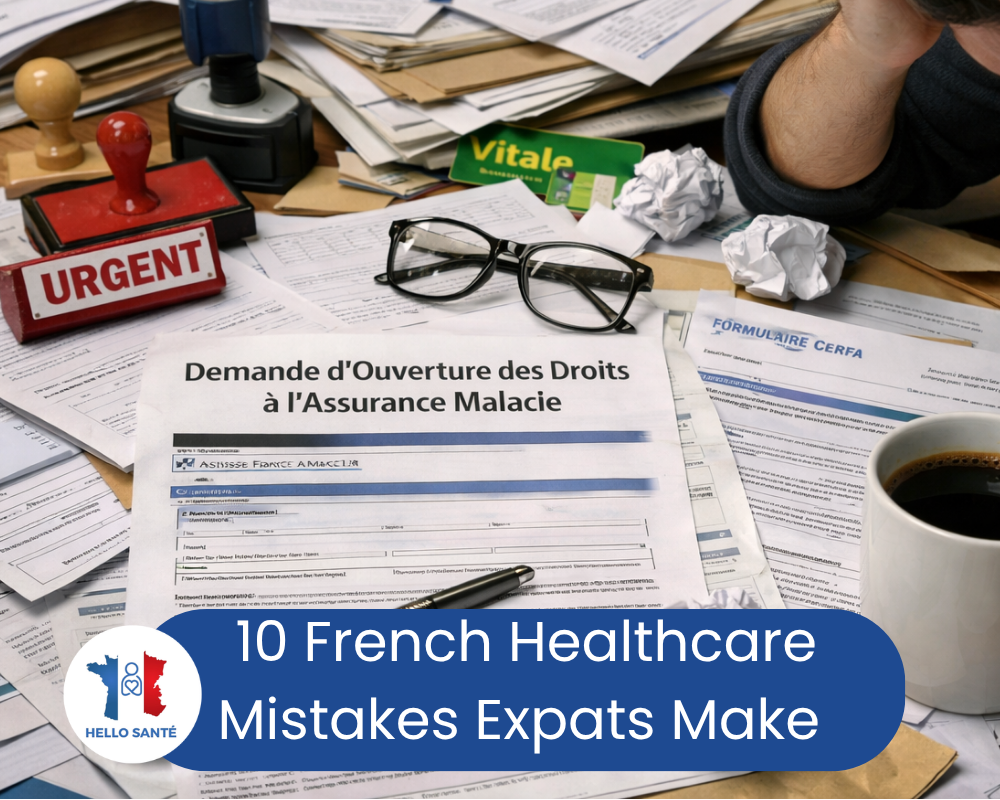
French healthcare paperwork stress expat CPAM application documents

10 French Healthcare Mistakes Expats Make (And How to Avoid Them)

Moving to France comes with a dream: better quality of life, great food, and one of the best healthcare systems in the world.

And that last part is true — once you’re in it.

But if you’re an expat trying to access French healthcare for the first time, you’ll quickly realise something:
the system is excellent… the process is not.

Here are the 10 most common French healthcare mistakes expats make, based on real questions — and how to avoid them.

French healthcare mistakes expats guide

Understanding the most common French healthcare mistakes expats make can save you months of delays and frustration.

1. Thinking You’re Automatically Covered

This is easily the most common misunderstanding.

Living in France, having a visa, or registering as a micro-entrepreneur does not mean you’re covered. Healthcare rights only begin once your application has been accepted by CPAM.

Until then, you’re essentially outside the system — even if you’re working and paying into it.

👉 What to do instead:
Start your CPAM application as early as possible and assume there will be a waiting period.

2. Not Applying to CPAM Properly

Many expats assume their healthcare is “being handled somewhere in the background.”

It isn’t.

You usually need to submit a full application yourself, including:

  • passport or ID
  • birth certificate (often long form)
  • proof of address
  • visa or residency documents

For example, missing even one document can stall your entire application.

👉 Tip: Send a complete file the first time — it saves weeks (or months).

If you’re not sure how to apply, read our step-by-step guide here

French healthcare mistakes expats guide

3. Underestimating Carte Vitale Delays

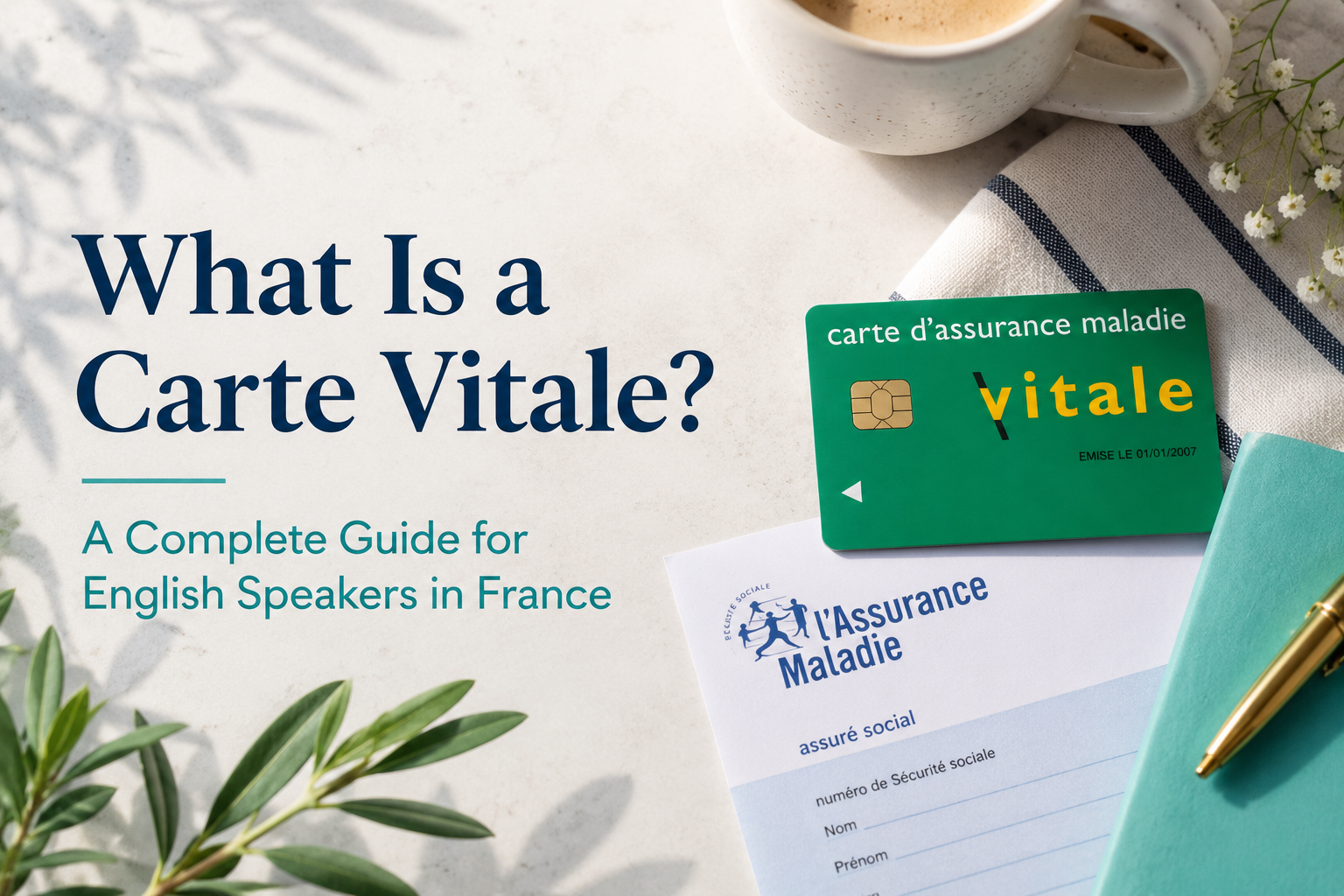
The famous green card.

People expect it quickly, but in reality:

  • getting your social security number takes time
  • getting your Carte Vitale takes even longer

It’s not unusual for the full process to take several months, especially in busy regions.

👉 Important: Your rights can start before you receive the card.

4. Submitting Incorrect Documents

This is where most applications fall apart.

The biggest culprit? Birth certificates.

France often requires:

  • a full (long-form) version
  • sometimes issued within a certain timeframe
  • sometimes translated by a certified translator

meaning, If your document doesn’t meet expectations, your file may be paused without clear explanation.

👉 Tip: Double-check requirements before submitting anything.

5. Waiting for a Carte Vitale Before Seeing a Doctor

A lot of expats delay care because they think:

👉 “I’ll wait until everything is set up.”

You don’t need to.

You can:

  • book appointments
  • pay upfront
  • claim reimbursement later once your number is active

This is how many French people also navigate the system early on.

6. Not Having Temporary Health Insurance

There is almost always a gap period when you first arrive.

Even if everything goes smoothly, you may not be covered for weeks (or longer).

During that time:

  • consultations are fully out-of-pocket
  • emergencies can be expensive

👉 Tip: Short-term private insurance can cover this transition and give peace of mind.

7. Confusing URSSAF with CPAM

This is especially common for freelancers and micro-entrepreneurs.

URSSAF = collects your social contributions
CPAM = manages your healthcare rights

They are connected in theory, but in practice:
👉 registering your business does not activate your healthcare

👉 Tip: Treat these as two separate processes and follow both.

8. Not Following Up on Your Application

The French system doesn’t always notify you when something is wrong.

If your application is incomplete or delayed, you might not hear anything.

This leads many expats to assume:
👉 “No news = everything is fine”

It usually isn’t.

👉 What to do:

  • check your Ameli account (if you have one)
  • call or email CPAM
  • follow up regularly

9. Assuming Reimbursements Are Automatic

At the beginning, the system is not fully digital for you yet.

Without your Carte Vitale:

  • you may receive paper forms (feuilles de soins)
  • you’ll need to send them manually
  • reimbursements take longer to process

Once everything is set up, it becomes much smoother.

This part matters more than people expect.

When things go wrong, it’s easy to think:

  • you’ve made a mistake
  • you’ve misunderstood something
  • everyone else has figured it out

They haven’t.

Even long-term residents run into:

  • delays
  • lost files
  • repeated requests

👉 It’s not a personal failure — it’s how the system works.

10. Thinking You’re the Only One Struggling

Final Thoughts on French Healthcare for Expats

French healthcare is genuinely excellent:

  • high-quality care
  • affordable costs
  • strong coverage

But accessing it requires:
👉 patience
👉 organisation
👉 persistence

If you understand the process upfront, you can avoid most of the stress.

Need Help Navigating French Healthcare?

We’ve broken down the timelines, documents, and steps in detail here

French healthcare is great once you’re in — getting there is the hard part. If you need help, Hello Santé is here to guide you through it.

Here are some of the most common questions expats ask about French healthcare:
How long does it take to get healthcare in France?

In most cases, it takes 1 to 3 months to be registered with French healthcare (CPAM), but delays are very common. If documents are missing or incorrect, it can take longer. Your Carte Vitale usually arrives after your number is issued.

No. Even if you live and work in France, you are not automatically covered. You must apply for healthcare through CPAM and wait for your application to be approved.

Yes. You can still:

  • see a doctor
  • pay upfront
  • get reimbursed later

The Carte Vitale simply makes the process faster and easier.

In most cases, yes. There is usually a gap period before your French healthcare becomes active, so temporary private insurance can help cover unexpected costs.

Typically, you’ll need:

  • a valid ID or passport
  • a birth certificate (often long-form)
  • proof of address in France
  • residency or visa documents

Requirements can vary slightly depending on your situation.

The Carte Vitale is your French health insurance card. It allows doctors and pharmacies to process reimbursements automatically without paperwork.

PUMA (Protection Universelle Maladie) is the system that gives legal residents access to healthcare in France after living there for at least 3 months (in most cases).

Yes, but not automatically. Registering as a micro-entrepreneur does not activate healthcare — you still need to apply separately through CPAM.

Delays are usually caused by:

  • missing or incorrect documents
  • high processing volumes
  • incomplete applications

Following up with CPAM can help move things forward.

Not always. The system typically reimburses around 70% of standard costs, which is why many people take out a mutuelle (top-up insurance) to cover the rest.

Share the Post:

Related Posts

Clear Healthcare Guidance for English Speakers in France

Find Out How Hello Santé Can Help
Scroll to Top

Need a hand? We're here to help.

Have a question about our services or need help choosing the right option?
Send us a message and a member of our team will get back to you shortly.