
Disclaimer
The responses shared in this interview are expressed in a personal capacity by Yvette, who has volunteered as a Sapeur-Pompier Volontaire in the Charente for the past four years. Official communications regarding French fire and rescue services should be directed to the relevant departmental fire and rescue service (SDIS). In the Charente, this is SDIS 16, 16340 L’Isle d’Espagnac. For first-aid information and training, readers should contact accredited organisations such as the Croix-Rouge Française or their local Union Départementale des Sapeurs-Pompiers (UDSP). Your local mairie, préfecture or fire station can provide further information about civil security and emergency services in your area.
Part of the Hello Santé Healthcare Professionals Interview Series
When most people think of firefighters, they imagine dramatic rescues, burning buildings and flashing blue lights. But in France, the reality of being a Pompier is often very different—and far more varied than many people realise.
For this edition of our Hello Santé interview series, we spoke with Yvette, a volunteer Sapeur-Pompier Volontaire serving in the Charente department. Having joined later in life after moving to France from the UK, Yvette brings a unique perspective on emergency services, volunteering, first aid and the realities of responding to emergencies in rural France.
Her story is both inspiring and reassuring, offering valuable insight into how the French emergency system works and what happens when someone calls for help.
Meet Yvette: From New Arrival in France to Volunteer Pompier
Before arriving in France more than 20 years ago, Yvette had no professional background in healthcare or emergency services.
“I’d always wanted to be ‘the first aider’, but my position meant I never was. I never thought to qualify as a first aider in a private capacity, but very much wish I had. If you’re reading this and feel the same, don’t hesitate—do it. You may save a life.”
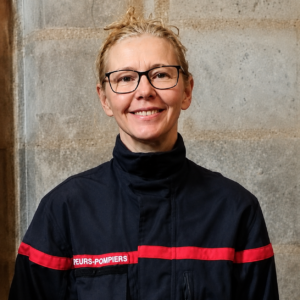
After settling into life in rural France and hearing the local fire station siren regularly, Yvette became curious about the role of volunteer pompiers.
Initially, she believed she was too old to join after seeing an age limit of 40. What she later discovered was that this applied to professional firefighters, not volunteers.
Years later, just before her 56th birthday, a chance conversation with pompiers distributing calendars changed everything.
“They said, ‘You could do it!’ I replied that I knew I couldn’t because I was far too old. They asked my age, feigned surprise, and told me I needed to get down to the station before I turned 56.”
She completed the medical, fitness and aptitude assessments and was eventually accepted as a volunteer pompier.
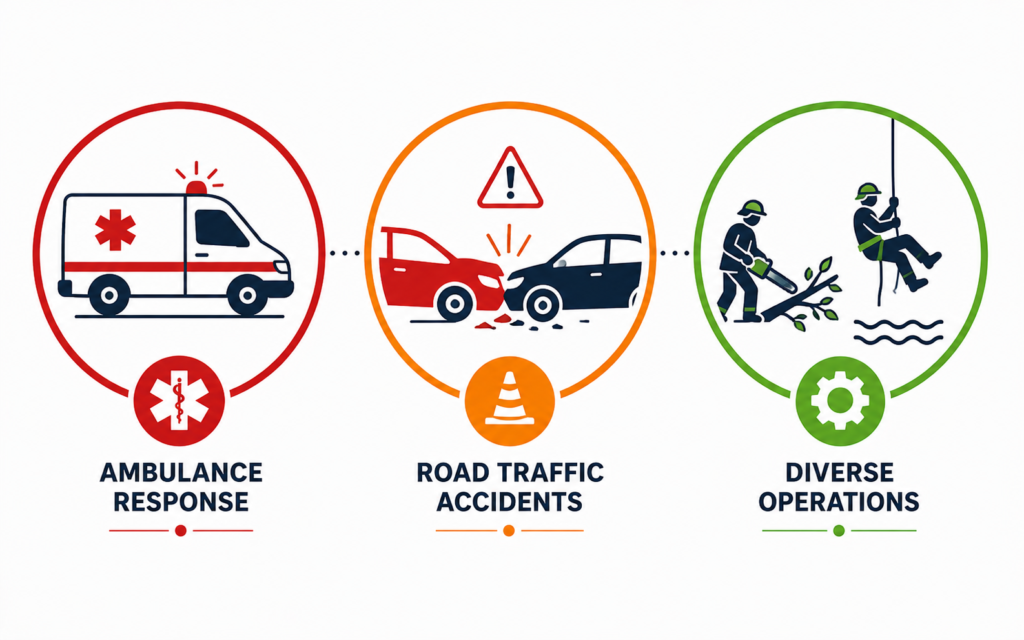
The minimum commitment is five years, and recruits have three years to complete training across four key intervention areas:
- Fire
- Ambulance and medical assistance
- Road and rail traffic accidents
- Diverse operations
Like many new recruits, Yvette began with ambulance and first-aid training, which forms the foundation of all emergency interventions.
“As our first priority in any situation is life saving, it forms the backbone of our approach to all types of intervention.”
Today, she is qualified in ambulance response, road traffic accidents and diverse operations.
Her journey has not been without challenges. Following a serious accident in which she shattered her hip and required a full hip replacement, Yvette worked hard to return to service after only four months . Fifteen months later she also qualified for and competed in the National Cross Country Championships, where she was the oldest competitor by six years.
Although she has not completed the fire intervention training, she continues to serve her community and remains passionate about supporting both her colleagues and the public.
What Does a Typical Day Look Like for a Volunteer Pompier?
Unlike professional firefighters who are based full-time at larger stations, many volunteer pompiers in rural France remain at home while on duty and respond when called.
“When your bip goes off, you travel to the station. We also receive alerts through a mobile application.”
Yvette currently serves on duty (“garde”) every other week due to volunteer shortages at her local station.
Her commitment includes:
- Evenings and overnight from Monday to Thursday
- Continuous cover from Friday evening until Monday morning
- Twenty-four-hour availability during public holidays
Sunday mornings are typically spent at the station carrying out training, maintenance, equipment checks, cleaning and discussing operational matters. They also welcome members of the public who visit, sometimes because they or their children are interested in joining the service, or maybe to meet the people who came to their assistance in an emergency.
One of the biggest challenges is unpredictability.
“You have no idea how a shift might go. It could be busy, it could be quiet. You need to be ready to go.”
When an alert comes in, firefighters immediately receive information including:
- The type of emergency
- The location
- The age and gender of any casualty
- Resources deployed
- Their specific role in the response
This allows crews to prepare mentally and select the correct protective equipment before leaving.
“The first rule of being a Pompier is ‘se protéger’—protect yourself first. Otherwise you’ll become another casualty and won’t be able to help anyone.”
What Emergencies Do French Pompiers Respond To Most Often?
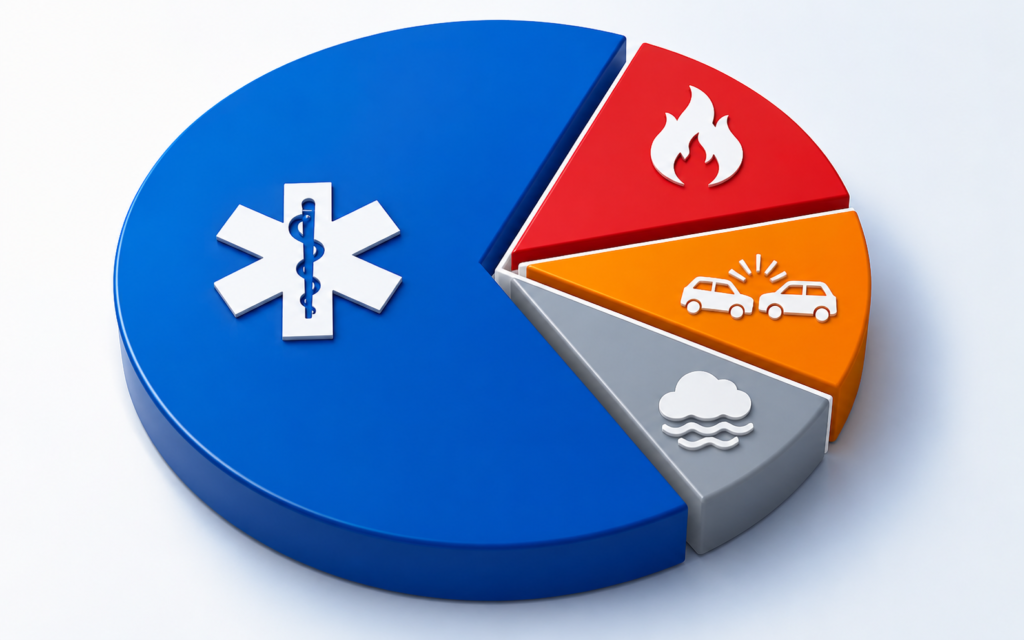
One of the biggest surprises for many people is that pompiers spend far more time responding to medical emergencies than fighting fires.
In the Charente department, more than three-quarters of interventions involve Secours aux Personnes (ambulance and medical assistance).
These include:
- Illnesses
- Falls and injuries
- Cardiac emergencies
- Medical crises requiring urgent assessment
Fires and road traffic accidents each account for a little under 10% of interventions, while other incidents include flooding, animal rescues, storm damage and environmental hazards.
“As our first priority in any situation is life saving, it forms the backbone of our approach to all interventions.”
The Biggest Misconception About Emergency Services in France
Many people assume that everyone working in emergency services is a salaried professional.
According to Yvette, this is one of the most common misunderstandings.
“For Pompiers, 80% are volunteers. In rural areas this rises to 100%.”
At her station, every firefighter—including the station chief—is a volunteer.
“We do this in addition to our normal work and family lives.”
Without volunteers, many communities across France would struggle to maintain emergency cover.
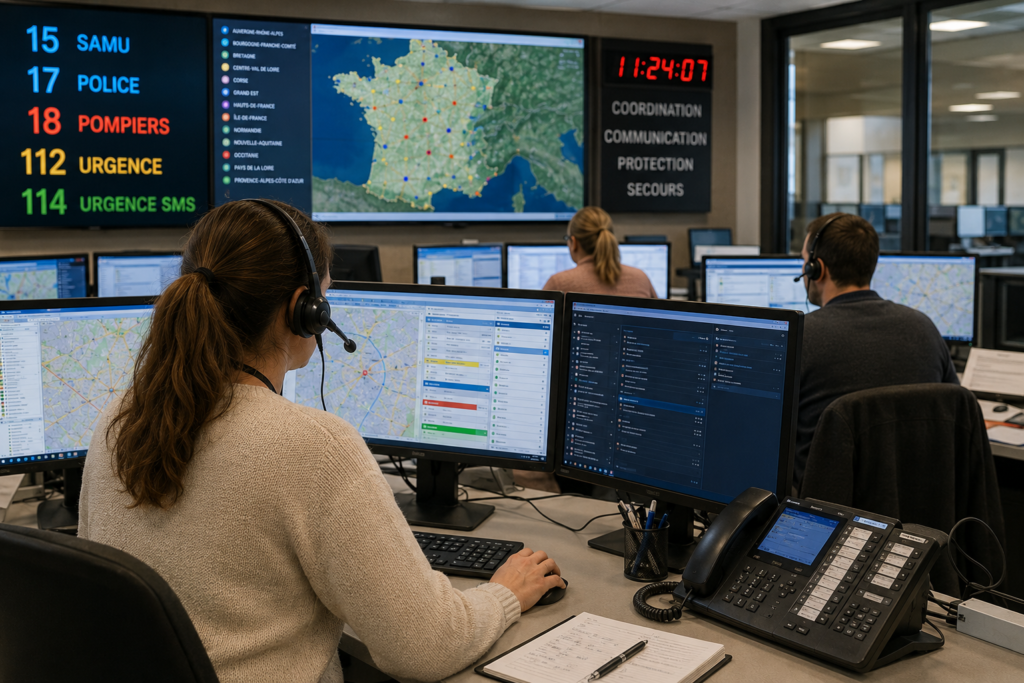
What Happens After You Call Emergency Services in France?
Understanding what happens after dialling an emergency number can help reduce anxiety during a crisis.
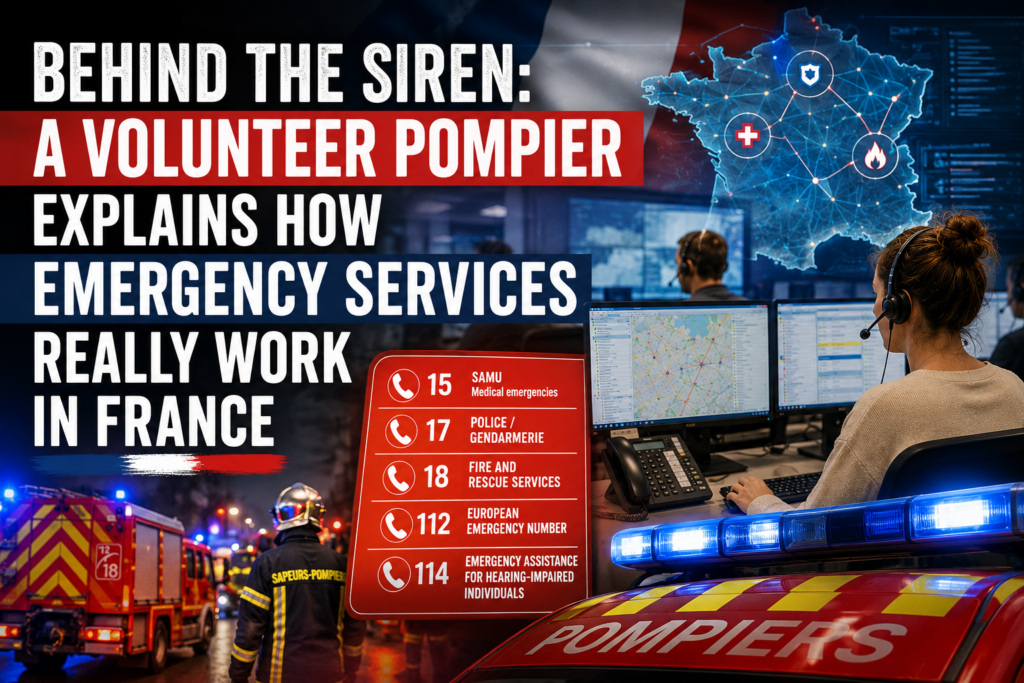
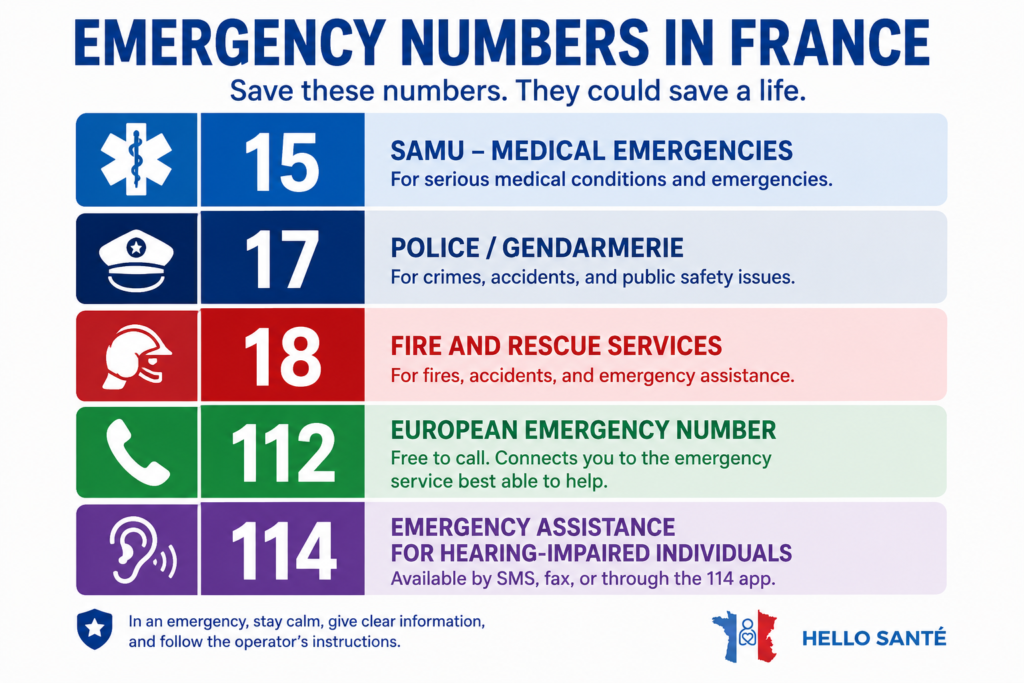
France operates several emergency numbers, including:
- 15 – SAMU (medical emergencies)
- 17 – Police / Gendarmerie
- 18 – Fire and rescue services
- 112 – European emergency number (multi-service)
- 114 – Emergency assistance for hearing-impaired individuals
Even if you are using a non-French mobile phone while in France, simply dial the emergency number and you will be connected to the local emergency service call centre. The emergency services have systems in place to help locate callers where the location is remote or unclear. This can be particularly reassuring for visitors and newcomers who may be unfamiliar with the French system.
When a call is received, trained operators gather information about:
- The location
- The nature of the emergency
- The number of people involved
- The current condition of casualties and any first-aid actions already undertaken
- Any risks at the scene
This information is used to determine which services and resources are required.
“There is constant communication and coordination between services.”
In medical emergencies, a Médecin Régulateur (regulating doctor) often oversees the case from the beginning.
They may:
- Guide callers through CPR
- Provide first-aid instructions
- Advise on burns or trauma care
- Coordinate treatment decisions
- Determine the most appropriate hospital
Meanwhile, emergency crews provide continuous updates from the scene.
What Information Helps Emergency Responders Most?
Yvette recommends remembering four key questions:
Who?
- Name of the casualty
- Age if known
- Caller details
What?
- Nature of the incident
- Number of people involved
- Severity of injuries or illness and any first aid administered
- Type and number of vehicles or other things affected (for example a car or HGV, a house or barn, a field or woodland area, animals and livestock, etc.)
When?
- Timeline of events
- How long symptoms have been present and how they have evolved
Where?
- Exact location
- Access difficulties
- Potential hazards
Additional medical information such as allergies, medications and pre-existing conditions can also be extremely valuable.
What Should You Do During an Emergency?
The advice is simple but vital:
“First of all, make and keep yourself safe.”
Yvette stresses that helping others should never place you in danger.
Her recommendations include:
- Call emergency services immediately
- Use 112 if unsure which service is required
- Put your phone on speaker if providing first aid
- Follow instructions from the call handler
- Stay on the line until advised otherwise
- Make your location visible if possible
- Gather important documents if safe to do so
The emergency operator may guide you through lifesaving actions while help is on the way.
Challenges for Expats and Non-French Speakers
For newcomers to France, navigating the emergency system can feel intimidating.
The presence of multiple emergency numbers can be confusing, particularly for those familiar with a single emergency number system elsewhere.
Language barriers can also create challenges.
Fortunately, support exists.
“Provision is made via 112 for multilingual assistance where necessary.”
Emergency call centres often have access to translation support, although this may take additional time.
For this reason, Yvette recommends learning a few essential emergency phrases in French whenever possible and, where possible, undertaking basic first-aid training.
What Surprised Yvette Most About Being a Pompier?
Perhaps the most unexpected aspect of the role is the emotional support emergency responders provide.
“We also take care of other people affected by an incident.”
Family members, friends and witnesses often require guidance, reassurance and practical support even when they are not physically injured.
Emergency services also work closely with:
- Local councils (Mairies)
- Social services
- Healthcare providers
- Other public agencies
“Emergencies don’t happen in isolation—they are woven into the rich tapestry of life.”
A Final Message About Emergency Services in France
Yvette’s closing message offers an important reminder about the people behind the uniforms.
“From my experience, I and the people I serve alongside are passionate and dedicated. We’re human. There are many checks and balances built into the system, every situation is different, and we adapt.”
She explains that emergency responses can involve multiple organisations, complex decision-making and extensive behind-the-scenes coordination.
“So please remember that there’s often a raft of other people and activity behind the scenes that you can’t see—all working to deliver the right emergency response.”
About Our Interview Series
At Hello Santé, we’re committed to helping international residents, expats and visitors better understand the French healthcare and emergency systems.
Through conversations with healthcare professionals, emergency responders and frontline workers, we aim to make navigating life in France clearer, more accessible and less intimidating.
We would like to thank Yvette for sharing her experience and insight into the vital work carried out by volunteer pompiers across France.
Interested in learning more about healthcare and emergency services in France? Explore more guides and interviews on the Hello Santé blog.