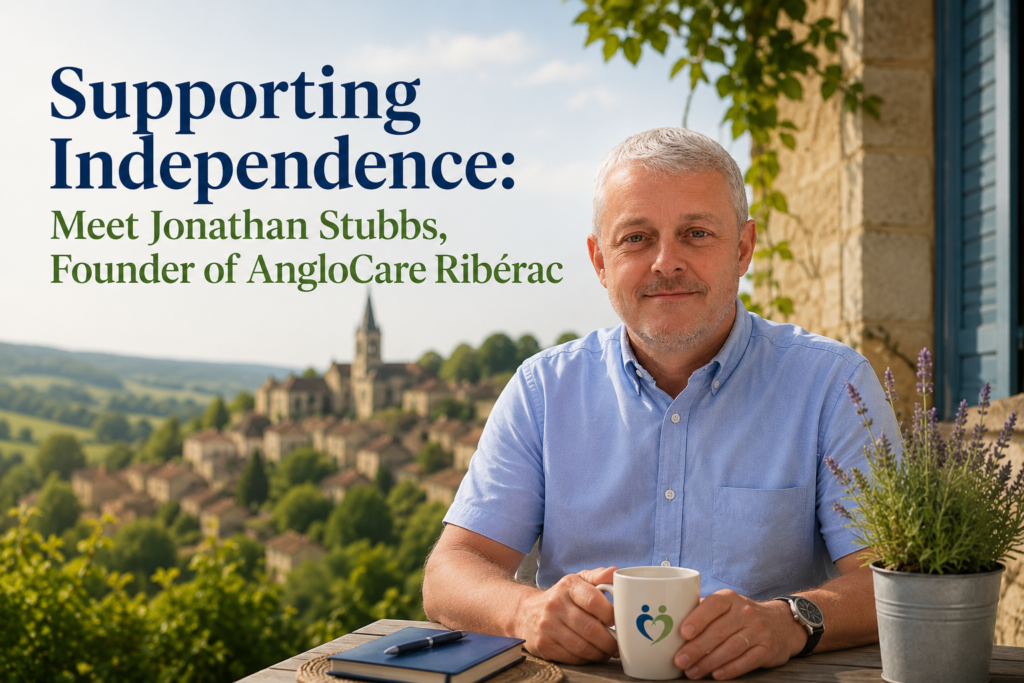
In our Healthcare Professionals Interview Series, Hello Santé speaks with Jonathan Stubbs, founder of AngloCare Ribérac, about supporting English-speaking expats living with complex health conditions in France, the challenges families face when caring for loved ones, and why compassionate, person-centred care can make all the difference.
Helping Expats Navigate Care in France
For many English-speaking residents living in rural France, accessing healthcare and support services can be challenging. Language barriers, unfamiliar administrative systems, and the realities of ageing or illness can quickly become overwhelming.
Jonathan Stubbs founded AngloCare Ribérac to bridge that gap, providing practical support, advocacy, and non-medical home care for English-speaking expatriates across the Dordogne.
We spoke with Jonathan about his background, his passion for helping others, and why maintaining independence at home remains at the heart of everything he does.
A Personal Journey into Care and Advocacy
Jonathan’s professional background spans healthcare, emergency response, education, and social support. Throughout his career, he has worked alongside people facing chronic illness, disability, mental health challenges, ageing, and end-of-life issues.
“These experiences taught me the importance of dignity, compassion, and practical support,” Jonathan explains.
After relocating to the Dordogne, he recognised a recurring problem among many expatriates: navigating the French healthcare and social care systems was often difficult, particularly during times of illness or crisis.
“I established AngloCare Ribérac to provide reliable, person-centred support that helps people remain independent in their own homes for as long as possible.”
Supporting People with Complex Care Needs
Jonathan’s experience includes training in pre-hospital emergency care and trauma care, alongside years of practical experience supporting individuals living with neurological conditions, chronic illnesses, reduced mobility, cognitive impairment, and age-related health challenges.
His work focuses not only on the practical aspects of care but also on understanding the wider impact illness can have on families and support networks.
“Every individual is unique,” he says. “Good care means looking beyond a diagnosis and recognising the person behind it.”

What Services Does AngloCare Ribérac Provide?
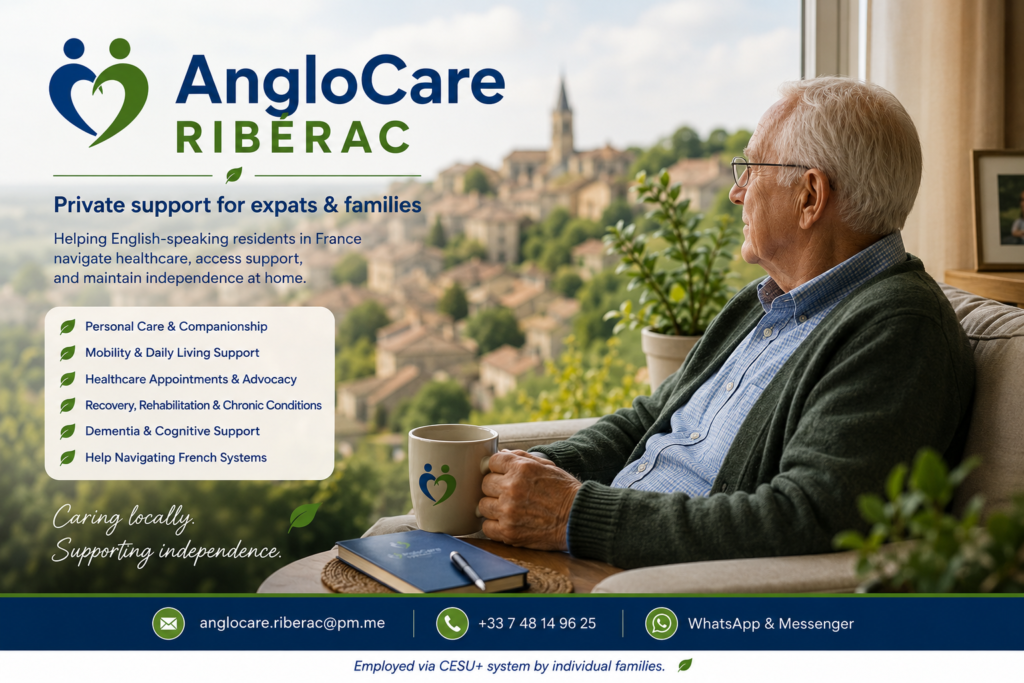
AngloCare Ribérac offers a range of non-medical support services designed to help adults maintain their independence and quality of life at home.
Services include:
- Companionship and wellbeing support
- Assistance with daily living activities
- Transport and accompaniment to medical appointments
- Post-hospital discharge support
- Care coordination and planning
- Advocacy services
- Guidance navigating French healthcare and social care systems
Many clients are English-speaking expatriates living in the Dordogne who are managing chronic health conditions, dementia, Parkinson’s disease, mobility issues, or recovery following surgery or stroke.
Why English-Speaking Care Support Matters in France
For many expats, medical consultations and healthcare administration can be stressful, particularly when complex terminology or important decisions are involved.
“When people become unwell, communication becomes critically important,” Jonathan explains.
Even those with conversational French can struggle when discussing diagnoses, treatment options, care planning, or administrative procedures.
Having support from someone who understands both English and the realities of the French healthcare system can improve communication, reduce anxiety, and help people make informed decisions about their care.
For many expatriates, English-speaking support also reduces feelings of isolation and provides reassurance during what can often be a challenging period in their lives.
The Challenges Families Face with Dementia, Parkinson’s and Stroke Recovery
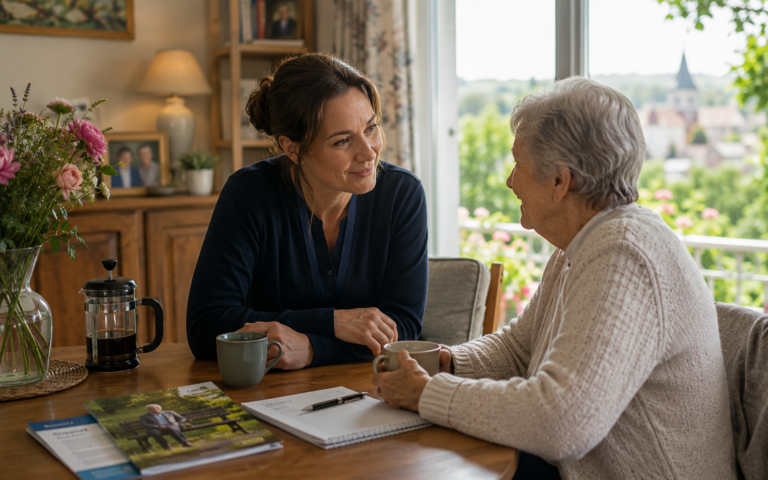
Caring for a loved one with Alzheimer’s disease, Parkinson’s disease, or following a stroke can place enormous emotional and practical demands on families.
“Many family members suddenly find themselves in the role of caregiver without any formal training or preparation,” Jonathan says.
These conditions often affect mobility, communication, cognition, behaviour, and independence, creating ongoing challenges for both the individual and those supporting them.
For expatriate families in France, additional difficulties can include:
- Understanding healthcare pathways
- Accessing support services
- Managing administrative requirements
- Communicating with healthcare professionals
- Identifying available financial assistance
“Many people simply don’t know where to begin, and that uncertainty adds further stress during an already difficult time.”
Promoting Independence at Home
One of the core principles behind AngloCare Ribérac is helping clients remain independent for as long as possible.
“My approach is about supporting independence rather than replacing it,” Jonathan explains.
This may involve helping clients establish routines, supporting rehabilitation goals, improving access to services, reducing risks within the home, or simply providing companionship and encouragement.
The goal is always to help individuals maintain control over their lives while continuing to live safely and comfortably in familiar surroundings.
The Human Impact of Care
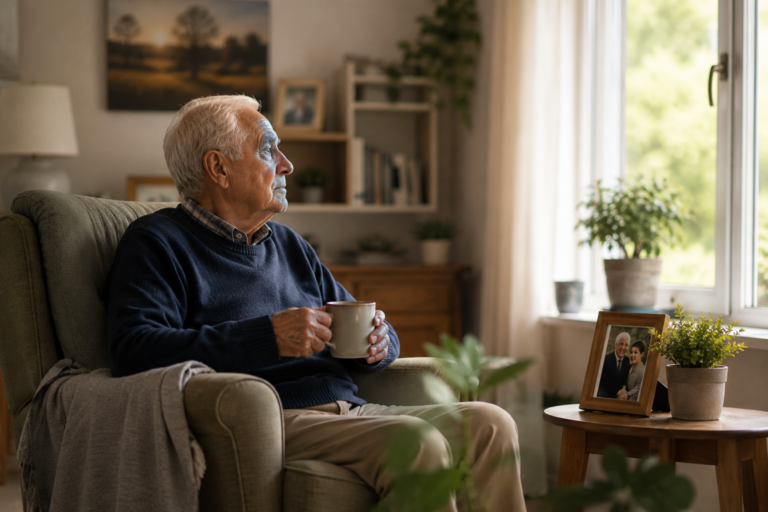
When asked about memorable experiences, Jonathan highlights the importance of helping families move from crisis to confidence.
“I’ve supported people recovering from major health events who felt completely overwhelmed by the practical realities of daily life and navigating healthcare services.”
Through advocacy, care coordination, and practical assistance, he has helped families regain a sense of stability and reassurance.
“Seeing someone’s confidence return and knowing they no longer feel alone is often the most rewarding part of what I do.”
Advice for Expats Navigating Healthcare in France
Jonathan’s advice is simple:
“Seek help early rather than waiting for a situation to become a crisis.”
He recommends keeping organised records of medical documents, asking questions whenever something is unclear, and seeking guidance when navigating unfamiliar systems.
“France has excellent healthcare and social support services, but understanding how to access them can be challenging, particularly for non-native French speakers.”
Many forms of assistance are available, but people often need guidance to identify the right pathway and complete the necessary administrative processes.
What Makes AngloCare Ribérac Different?
Unlike larger organisations, Jonathan works directly with his clients, providing continuity, consistency, and a trusted personal relationship.
He combines practical support with healthcare knowledge, advocacy, and a deep understanding of the challenges faced by English-speaking residents living in France.
“Good care is about far more than completing tasks. It’s about listening, communicating, advocating, and helping people maintain dignity, independence, and quality of life.”
Every client is treated as an individual with their own history, preferences, and goals.
Looking Ahead
As AngloCare Ribérac continues to grow, Jonathan hopes to strengthen partnerships with healthcare professionals, social services, and community organisations throughout the Dordogne.
His vision is simple but powerful:
“I want AngloCare Ribérac to be recognised as a trusted source of practical help, guidance, and advocacy for English-speaking residents facing complex health and care challenges while living in France.”
As demand for English-speaking care support continues to increase across rural France, services such as AngloCare Ribérac play an increasingly important role in helping expatriates remain safe, independent, and connected to the support they need.
About AngloCare Ribérac
AngloCare Ribérac provides independent, English-speaking home support, care coordination, advocacy, companionship, and practical assistance for expatriates living in France.
Based in Ribérac, Dordogne, Jonathan primarily supports clients in and around the Ribérac area. Following an assessment of individual needs, services may also be provided further afield, including overnight support, live-in care arrangements, and assistance with international repatriation to the European country of the client’s or family’s choice.
AngloCare specialises in supporting adults living with chronic illness, neurological conditions, dementia, reduced mobility, recovery following stroke or surgery, and those requiring additional support to maintain independence at home.
Contact AngloCare Ribérac
Telephone: 07 48 14 96 25
Email: anglocare.riberac@pm.me
Service Area: Ribérac and surrounding areas across the Dordogne, with wider coverage available following assessment.
Facebook: AngloCare Ribérac
Hello Santé Healthcare Professionals Interview Series
If you are a healthcare professional, therapist, caregiver, support organisation, or health-related business serving the English-speaking community in France and would like to be featured in a future interview, contact Hello Santé at www.hellosante.org.