Moving from the United States to France comes with many adjustments—but one of the most important (and often confusing) is navigating the healthcare system. France offers one of the best healthcare systems in the world, but understanding how to access it as an American expat is essential.
This step-by-step guide explains exactly how to access healthcare in France, from registering with CPAM to understanding reimbursements and insurance.
Step 1: Understand the French Healthcare System
France has a universal healthcare system funded by the government and supported by supplemental private insurance known as a mutuelle.
As an expat, you typically:
Pay for care upfront
Receive partial reimbursement from the public system (Assurance Maladie)
Use a mutuelle to cover remaining costs

Step 2: Check Your Eligibility for Healthcare in France (PUMA)
Most American expats access healthcare through PUMA (Protection Universelle Maladie).
You are generally eligible if:
You legally reside in France
You have lived in France for at least three months
You intend to stay long term
Some visa types allow faster access, particularly work-related permits.
Step 3: Apply for CPAM (French Social Security)
To access healthcare in France, you must apply for Assurance Maladie through CPAM.
You will need:
Passport and visa or residency permit
Full birth certificate (officially translated into French)
Proof of address in France
French bank details (RIB)
Proof of stable residence
After applying, you will receive a temporary social security number followed by a permanent one.

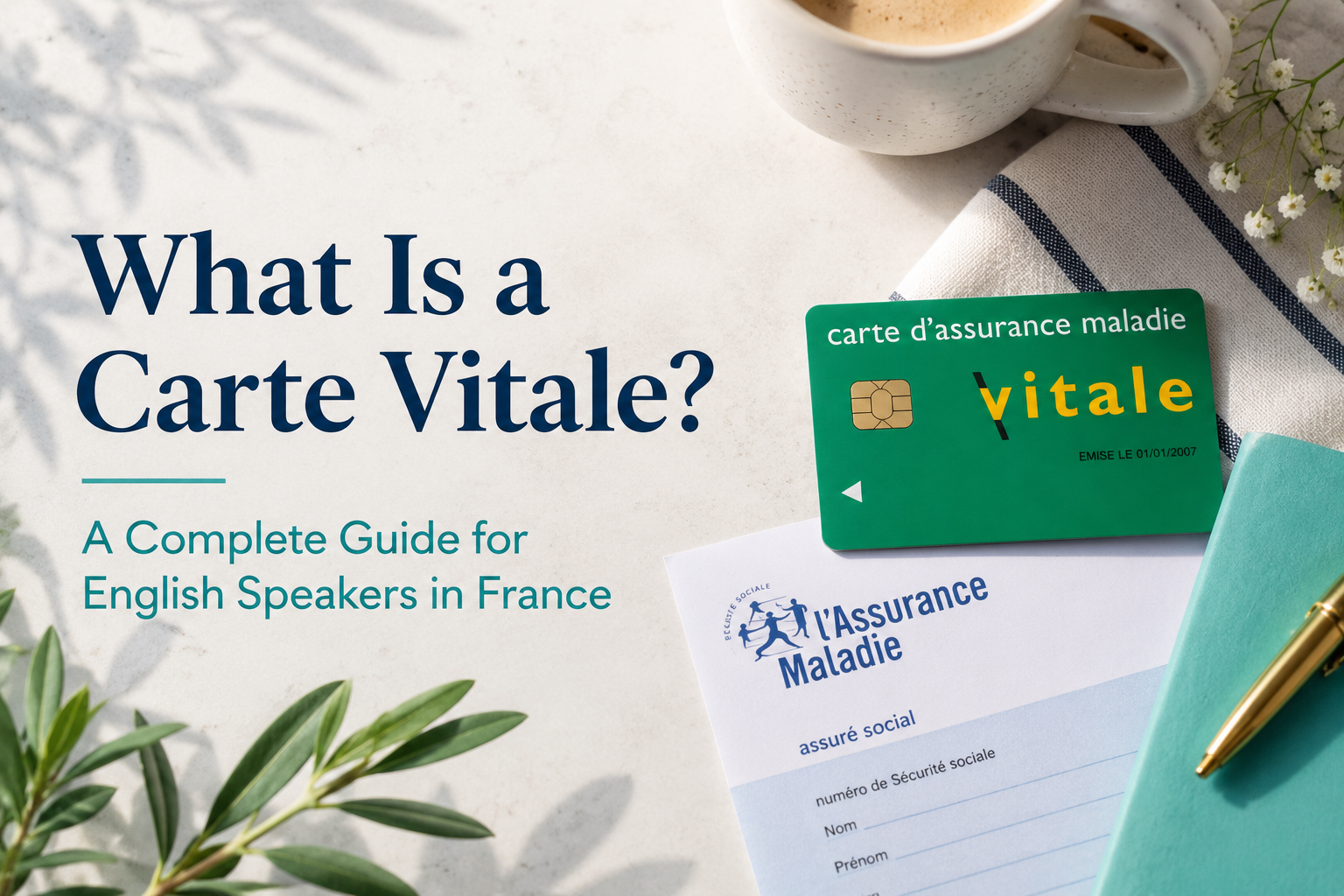
Step 4: Get Your Carte Vitale
The Carte Vitale is your official healthcare card in France. It simplifies the reimbursement process and is essential for smooth access to care.
Without it, you can still receive treatment, but reimbursements will take longer and require additional paperwork.
Step 5: Choose a Médecin Traitant
You should register with a médecin traitant (primary care doctor).
This allows you to:
Access better reimbursement rates
Follow the coordinated care pathway
Receive referrals to specialists when needed

Step 6: Understand Healthcare Costs and Reimbursements
Healthcare in France works differently from the U.S.
Typical process:
You attend a medical appointment (€30 for a general practitioner)
You pay upfront
CPAM reimburses approximately 70%
A mutuelle covers the remaining balance
Some services offer tiers payant, meaning you do not need to pay upfront.
Step 7: Get a Mutuelle (Top-Up Health Insurance)
A mutuelle is not mandatory but strongly recommended for American expats.
It helps cover:
Remaining medical costs not reimbursed by CPAM
Dental and vision care
Hospital stays and specialist fees
Step 8: Access Specialists and Emergency Care
Specialists usually require a referral from your médecin traitant
Pharmacies are widely available and play a key role in care
Emergency numbers:
15 (SAMU)
112 (European emergency number)

Step 9: Understand Cultural Differences in French Healthcare
American expats often notice key differences:
More focus on preventive care
Shorter but more frequent consultations
More structured administrative processes
A different approach to prescriptions and treatment
Step 10: Additional Healthcare Costs for Americans in France
Although healthcare in France is affordable, it is not entirely free. American expats should be aware of the following additional costs:
Upfront Payments
You may need to pay for appointments before reimbursement, especially before receiving your Carte Vitale.
Ticket Modérateur
The portion not reimbursed by CPAM (usually around 30%) is your responsibility without a mutuelle.
Specialist Fees (Dépassements d’Honoraires)
Some doctors charge above the standard rate. These fees are only partially reimbursed.
Hospital Extras
Private rooms and comfort services are not always fully covered.
Medication Costs
Reimbursement rates vary, and some medications are only partially covered.
Dental and Vision Care
These are poorly reimbursed under the public system and often require a mutuelle.
Waiting Period Costs
During your first three months in France, you may need private health insurance before becoming eligible for PUMA.
Additional Considerations for Retired Americans
If you are retiring in France, there are a few extra financial factors to keep in mind. Retirees who are not working may be subject to a healthcare contribution (known as cotisation subsidiaire maladie) depending on their income, particularly if it comes from pensions or investments. In addition, mutuelle premiums tend to be higher with age, and private insurance during the initial waiting period can be more expensive. While the French system still offers excellent value, planning for these additional costs is important for long-term financial stability.

Final Thoughts
Accessing healthcare in France as an American expat requires some initial administrative work, but once you are registered, the system is reliable, affordable, and high quality.
Planning ahead, organizing your documents, and understanding how reimbursements work will make the transition much smoother.
Need Help With Your CPAM Application?
Applying for healthcare in France through CPAM can be complex, especially when dealing with paperwork, translations, and administrative follow-ups.
Hello Santé supports American expats through the entire process—from preparing your application to submitting documents and communicating with CPAM on your behalf.
If you want to avoid delays and ensure your application is handled correctly, professional support can make the process significantly easier.