
And what you can realistically do to get an appointment faster.
For many women in France, booking a mammogram has become unexpectedly difficult.
Appointments disappear within days. Radiology centres stop taking new patients. Some women drive more than an hour for a routine screening. Others spend weeks calling clinics, refreshing Doctolib, or waiting for cancellation lists that never move.
In rural France, the situation can feel even worse.
And since COVID, many women say the system feels more complicated, more digital, and much harder to navigate.
They are not imagining it.
France still has one of Europe’s most respected organised breast-screening programmes. Women aged 50–74 are invited every two years for a mammogram covered at 100% through Assurance Maladie’s organised screening pathway. The programme includes double-reading of images by radiologists, a quality measure designed to improve cancer detection.
Source: Assurance Maladie / Ameli
But despite this strong framework on paper, access has become increasingly unequal — especially outside major cities.
Waiting times and appointment availability can vary significantly depending on region, department, and local healthcare capacity.
This is the deeper reality behind France’s mammogram appointment crisis.
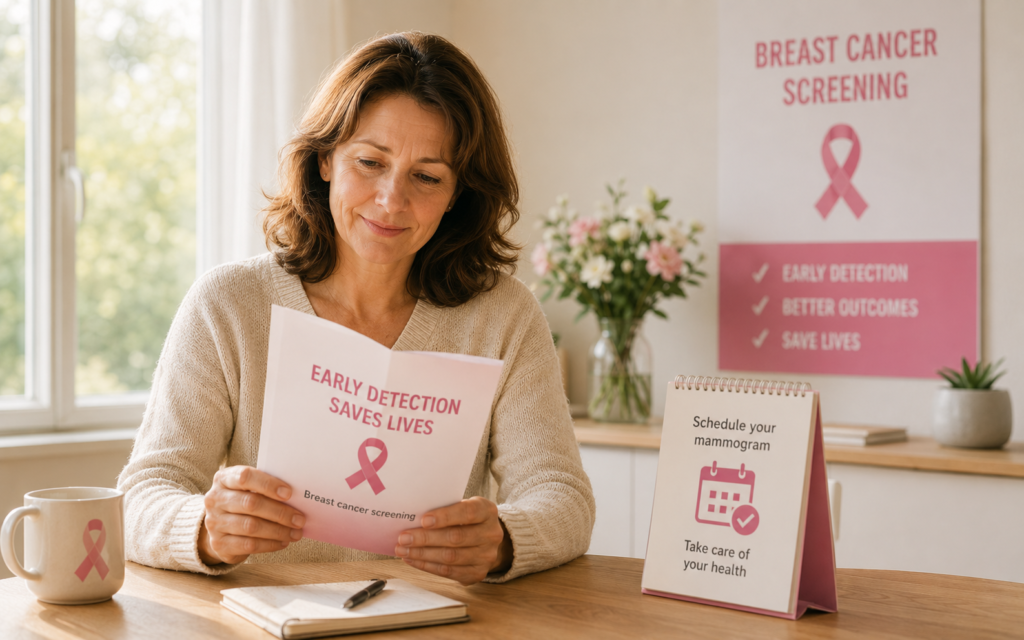
Why Mammogram Appointments Are So Difficult to Get in France
1. France has a shortage of radiology capacity
The first issue is simple: there are not enough available imaging appointments for the level of demand.
A 2025 report from the French Inspectorates General (IGAS/IGF) found that France had approximately 9,140 radiologists in 2024, with most working in the private sector rather than hospitals.
Source: IGAS/IGF report on radiology efficiency
This matters because:
- many rural areas have very few imaging centres
- some departments have only a handful of accredited mammography providers
- radiology workloads have increased sharply
- specialists are concentrated in larger cities
In practice, this creates bottlenecks:
- fewer appointment slots
- longer waiting times
- overloaded secretaries
- and limited flexibility for urgent or last-minute bookings
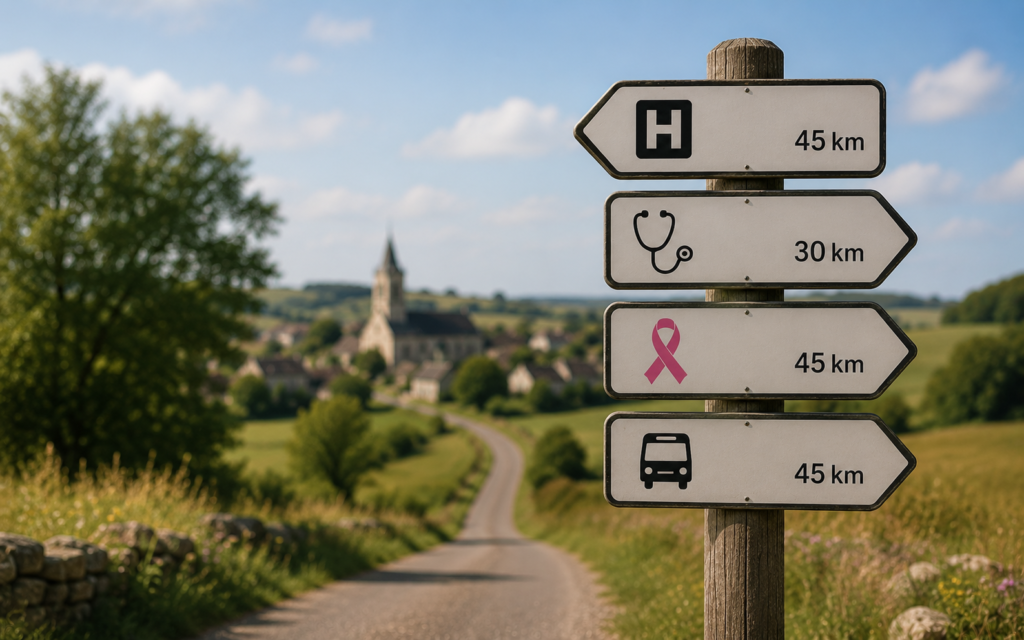
2. Rural France faces “medical desert” problems
Healthcare access in rural France has become increasingly uneven.
Women in smaller towns often face:
- long driving distances
- little or no public transport
- fewer specialists nearby
- limited parking or transport options
- time off work requirements
- childcare difficulties
- dependence on cancellation lists
Research published in International Journal for Equity in Health found that geographic access strongly influences participation in breast-cancer screening programmes in France, particularly in socioeconomically deprived areas.
Source:
https://link.springer.com/article/10.1186/s12942-022-00320-5
For many women, the issue is not willingness to get screened.
It is simply getting there.
3. COVID accelerated long-term changes already happening within the healthcare system.
This is one of the biggest reasons women say:
“It was easier before COVID.”
During the pandemic, routine screening programmes across Europe were paused or severely reduced.
French and European radiology organisations prioritised urgent cancer care while delaying routine mammograms during lockdowns.
Source: European Society of Breast Imaging (EUSOBI)
The result:
- cancelled appointments
- delayed invitations
- reduced appointment capacity
- fewer in-person consultations
- delayed cancer diagnoses
A French imaging study found breast cancer diagnoses fell by approximately 20% during the first lockdown because fewer women were screened.
But the real problem came afterward.
The backlog never disappeared
When mammography services resumed, France faced:
- normal annual demand
PLUS - months of delayed screenings
PLUS - postponed follow-up appointments
PLUS - staffing shortages
Healthcare systems emerged from COVID carrying enormous backlogs that still affect appointment availability today.
Many radiology departments continue to face significant pressure years later due to staffing shortages and accumulated demand.
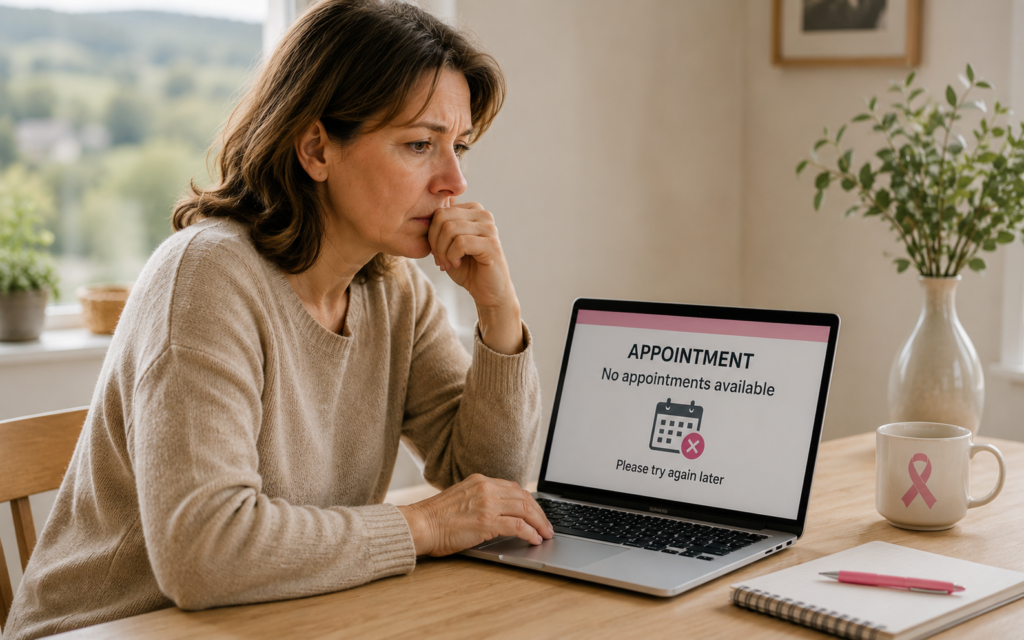
4. The booking system became more digital — and stricter
Many women now feel:
“You can’t just call anymore.”
And in many places, that is true.
COVID accelerated healthcare digitisation throughout France.
For many patients, digital systems improved convenience and efficiency. However, they can also create barriers for people who are less comfortable navigating online healthcare platforms
Healthcare providers increasingly moved toward:
- online booking systems
- centralised appointment management
- digital invitation pathways
- automated scheduling
- stricter eligibility checks
- controlled patient flow
Since January 2024, organised breast-screening invitations are managed more centrally by Assurance Maladie, often through digital ameli accounts.
This improves administrative efficiency — but can create barriers for women who:
- are less digitally confident
- do not regularly use ameli
- struggle with online systems
- live in areas with poor connectivity
- or rely on telephone booking
Many radiology centres also reduced informal flexibility after COVID:
- fewer “squeeze-in” appointments
- tighter scheduling
- stricter cancellation policies
- prioritisation of urgent imaging
Many patients feel the system has become more administrative and less flexible than before COVID.
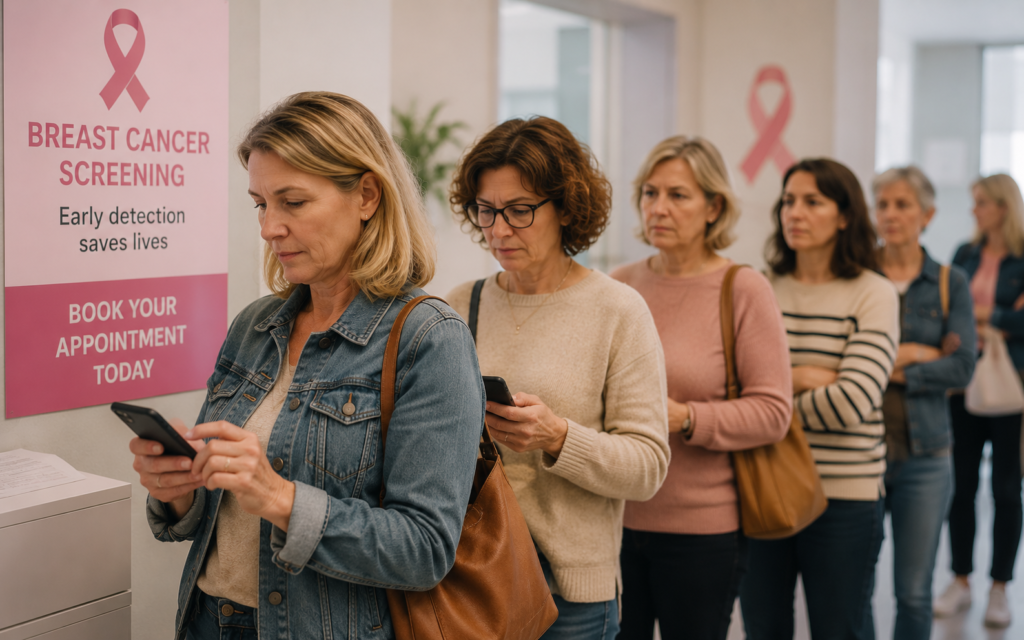
5. More women are trying to book screenings now
At the same time, demand has increased.
After COVID:
- many women attempted to catch up on delayed care
- breast-cancer awareness campaigns intensified
- anxiety about delayed diagnosis rose
- preventive health awareness increased
This created intense competition for appointments in already stretched systems.
Some local reports described mammography slots filling almost immediately after becoming available.
Why this matters so much
Breast cancer remains the most common cancer among women in France.
According to Assurance Maladie:
- more than 61,000 new cases were diagnosed in 2023
- early detection dramatically improves survival rates
- five-year survival is approximately 99% when detected early
Source:
https://www.ameli.fr/sage-femme/sante-et-prevention/depistage-organise-du-cancer-du-sein
Delayed screening is not simply inconvenient.
It can affect outcomes.
Practical Ways to Get a Mammogram Appointment Faster in France
If you are struggling to secure an appointment, these strategies genuinely help.
Some women are still able to secure appointments relatively quickly, particularly in larger towns and cities, but others report significantly longer waits and fewer local options
1. Use the official national screening directory
The official French screening portal allows women to search for approved mammography providers by commune and distance.
Importantly:
you can widen the search radius up to 200 km.
Official portal:
https://jefaismondepistage.cancer.fr/cancers-du-sein/prendre-rendez-vous/
Many women search only within their immediate town — but expanding the radius often reveals faster availability.
2. Do not rely only on Doctolib
Many centres:
- release limited online slots
- reserve appointments for phone bookings
- maintain internal cancellation lists
Always call directly.
Useful phrases:
- “Avez-vous des créneaux disponibles ?”
- “Puis-je être mise sur liste d’attente ?”
- “Avez-vous des désistements ?”
Cancellation appointments can appear very quickly.
3. Try neighbouring departments
This is especially important in rural France.
Large towns or nearby hospital centres often have:
- more imaging capacity
- larger radiology groups
- more frequent cancellations
Travelling slightly farther may reduce waiting time dramatically.
4. Avoid October if possible
“Octobre Rose” awareness campaigns increase demand significantly.
If your screening is routine and flexible, consider:
- November
- January
- February
Appointment pressure is often lower outside awareness periods.
5. Ask your GP, pharmacist, or mairie for help
Many women do not realise local healthcare networks can assist.
Useful local support:
- GP (médecin traitant)
- pharmacist
- sage-femme
- mairie
- France Services office
- local women’s health associations
They often know:
- which centres currently have shorter waits
- which clinics accept direct bookings
- where mobile screening units will visit
6. Check your ameli account regularly
Your organised screening invitation may now arrive digitally.
If you lost it:
- call 36 46
- ask for a replacement
- or request guidance on approved providers
One solution France urgently needs: mobile mammography units
Research in Normandy showed mobile mammography units significantly improved screening participation in rural areas.
Women living farther from radiology centres were substantially more likely to attend screening when mobile units were available.
Source:
https://pmc.ncbi.nlm.nih.gov/articles/PMC12861289/
Mobile screening may become one of the most effective ways to reduce rural healthcare inequality in France.
The hidden emotional burden
One of the least discussed aspects of this issue is the emotional impact.
Women often feel:
- anxious
- guilty for delaying appointments
- overwhelmed by administration
- exhausted by repeated calls
- discouraged by long waits
For rural women especially, healthcare access itself becomes labour:
- transport planning
- time off work
- childcare arrangements
- digital navigation
- repeated follow-up
Preventive healthcare should not require this level of persistence.
Final Thoughts
France’s breast-screening programme remains medically strong and internationally respected.
But access is becoming increasingly unequal.
For some women — particularly in rural areas — difficulty securing mammogram appointments may reflect a combination of:
- post-COVID healthcare backlogs
- radiology shortages
- rural medical deserts
- healthcare centralisation
- digital bureaucracy
- rising demand
- and overstretched healthcare workers
For many women — particularly in rural France — getting a mammogram now requires:
time,
transport,
organisation,
digital confidence,
and persistence.
This can create unequal access to preventive care depending on where people live.
And until access improves, practical information and local support remain essential.
Access to preventive healthcare should not depend on where you live, how confident you are online, or how many hours you can spend calling clinics.
At Hello Santé, we support individuals and families across France with practical healthcare guidance, appointment support, and help navigating the French medical system — particularly for those living in rural areas.
Need support or have questions? Contact Hello Santé to learn how we can help.
This article is intended for informational purposes only and does not replace medical advice from a healthcare professional.