
Part three of Hello Santé’s Octobre Rose series sharing women’s experiences of breast cancer care and support in France.
For Octobre Rose, Hello Santé is sharing the stories of women whose breast cancer diagnoses came at different stages of their lives. Through their experiences, we hope to offer honest insight, practical advice and reassurance to anyone facing a diagnosis—or supporting someone they love.
Our third story comes from Maggie Bolton, a 62-year-old yoga teacher who was diagnosed in November 2025. She received surgery and chemotherapy at Soyaux and radiotherapy at Girac Hospital in Angoulême.
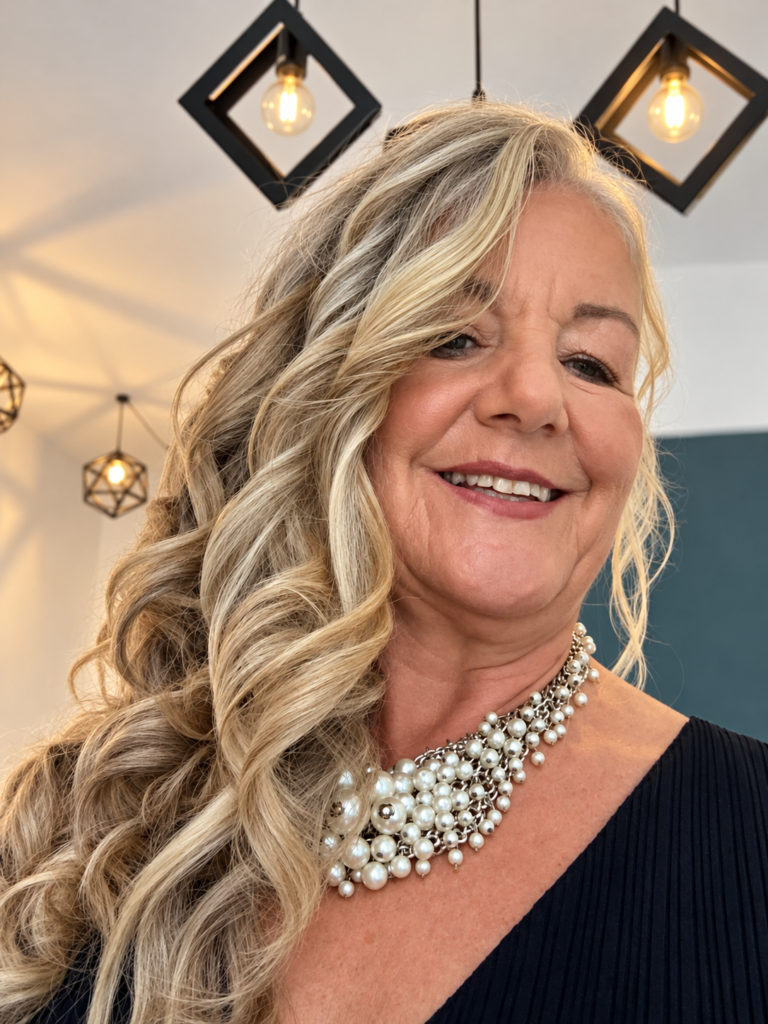
Ten months after her diagnosis, Maggie had completed chemotherapy and radiotherapy. “I am in remission,” she says. Her hair was beginning to grow back, she was teaching yoga again and she was looking towards the future.
A subtle change that did not feel right
Throughout 2025, Maggie had felt unusually tired. Like many of us might, she put it down to the general busyness of life.
Then, in October, she noticed a subtle change in her left breast.
“It felt a little like a soft-boiled egg,” she explains. “The tissue was only slightly thicker than on the right.”
It was not necessarily the kind of change everyone would immediately recognise as a warning sign, but Maggie listened to her instincts.
Having heard that waiting times for a mammogram in the Charente could be lengthy, she used Doctolib to look further afield. She already had her breast-screening reminder letter and found an appointment in Bordeaux within three weeks.
Following a mammogram, scans and a biopsy, Maggie received the news she had feared: it was breast cancer.
Suddenly, everything moved quickly
Within two days of receiving her diagnosis in Bordeaux, Maggie saw her médecin traitant, who referred her to a surgeon in Soyaux.
From that point, life seemed to become a fast-moving succession of appointments.
“It felt like being on a rollercoaster,” she says. “Everything moved so quickly, with a never-ending string of rendez-vous.”
Maggie initially underwent a lumpectomy and had axillary lymph nodes removed. This was followed by a mastectomy, chemotherapy and radiotherapy.
Although her French is good, understanding complex medical information in another language can be difficult—particularly when dealing with the shock and fear of a cancer diagnosis. Maggie found her surgeon, oncologist and radiologist reassuring and thorough. When something needed to be explained more clearly, they spoke to her in English.
“They were all amazing and explained everything,” she says.
Preparing for treatment
Following surgery, Maggie met members of the chemotherapy and radiotherapy nursing teams. They showed her around the departments, explained what she could expect from treatment and discussed possible side effects and ways of managing them.
She was also introduced to a doctor, dietitian, social worker and beautician.
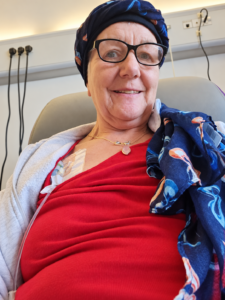
This preparation did not make treatment easy, but it helped remove some of the uncertainty. Maggie knew where she would be going, who would be caring for her and what might happen next.
Her treatment schedule was demanding. Radiotherapy took place every day for five weeks. Each session lasted only around ten minutes, but the round trip took approximately two hours, so Maggie used a taxi to attend.
Over time, the intense schedule of hospital care gradually reduced. Appointments that had once taken place every few days or weeks became four-monthly reviews.
That change brought mixed feelings.
Fewer appointments represented progress, but stepping away from the constant presence of the hospital team could also feel daunting. After months of being closely monitored, the space between check-ups can feel surprisingly lonely.
Maggie now has annual mammograms and takes hormone-blocking medication, which she expects to continue for at least five years and possibly as many as ten. She is also awaiting breast reconstruction, provisionally expected towards the end of 2027.
Friends who held her hand
Maggie’s friends created a rota to accompany her to chemotherapy.
She says she needed “a hand to hold,” but their support extended beyond sitting beside her during treatment. Afterwards, they would go to the bakery for coffee and cake and a visit to Grand Frais was a must!
These small rituals brought moments of friendship and normality into days dominated by cancer.
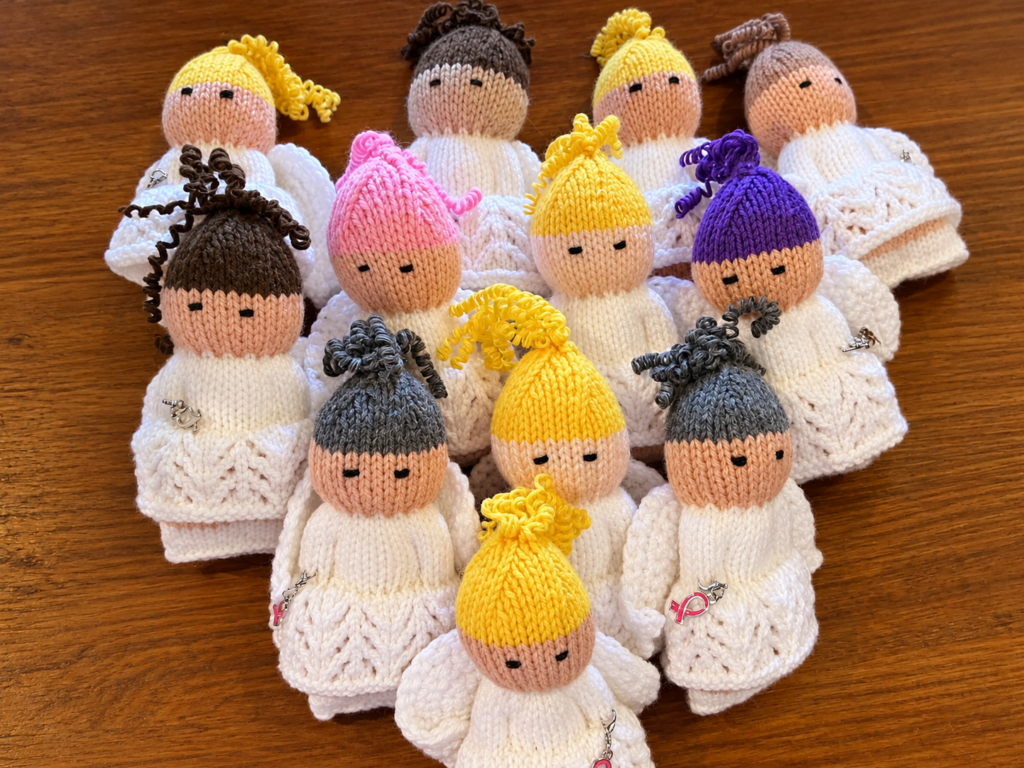
As a personal thank-you, Maggie knitted each friend an angel decorated with a breast-cancer symbol—a keepsake marking the part they had played in helping her through treatment.
Maggie also found support through Pink Ladies France, a Facebook group for women affected by cancer in France.
She describes it as an excellent and supportive community where women can ask questions without judgement or criticism. For someone facing unfamiliar treatments in a healthcare system that may not be in their first language, access to other women with firsthand experience can be invaluable.
The help that really matters
When someone is diagnosed with cancer, friends often say, “Let me know if there’s anything I can do.” It is kindly meant, but the person going through treatment may not have the energy to decide what to ask for.
Maggie remembers the practical and emotional gestures that made a genuine difference:
-
Helping her wash her hair after surgery
-
Accompanying her to have her hair cut short before chemotherapy
-
Taking her to treatment
-
Meeting for coffee and cake
-
Sending a simple “Hi” on WhatsApp
-
Listening without expecting her to pretend everything was fine
She also discovered that not everyone knew how to respond. Some people disappeared because they did not know what to say. Others offered help but were not there when she eventually asked for it.
Her experience reinforced how valuable reliable, uncomplicated support can be. Nobody needs to find the perfect words. A message, a lift, a cup of coffee or simply following through on an offer can mean far more than people realise.
“A walk in the park—Jurassic Park”
Maggie uses humour to describe her experience:
“My cancer journey was a walk in the park—Jurassic Park.”
Behind the joke lies the reality of what she endured: fear of the unknown, the risks and side effects of chemotherapy, the exhaustion of constantly fighting emotionally and the uncertainty of not knowing whether she would make it through.
“It’s a personal battle of the mind, body and spirit,” she says.
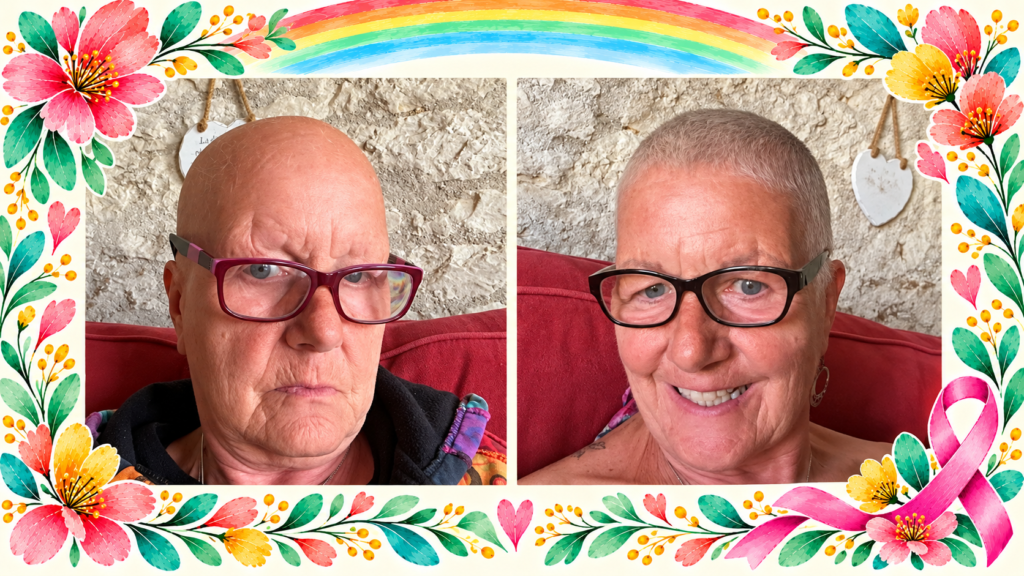
At the beginning of her journey, Maggie saw a double rainbow in the sky after a storm. She chose to see it as a sign that everything would be all right.
Since then, she has continued to look for rainbows.
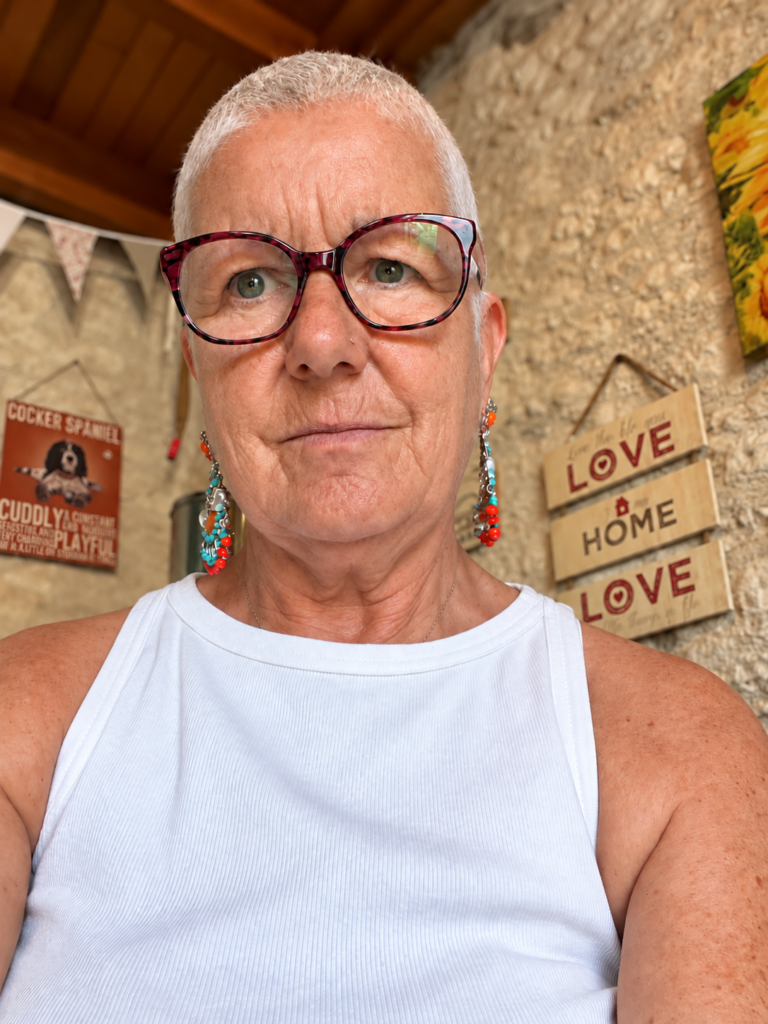
That search for colour has also influenced how she presents herself. She wears bright clothes, close-fitting tops and enormous earrings—which, she points out, look particularly fabulous with short hair.
These choices are not about pretending cancer is easy. They are Maggie’s way of holding on to her identity and finding moments of joy and confidence in a body that has been through enormous change.

Keeping life as normal as possible
Maggie tried to retain as much normality as her health allowed. She continued teaching yoga whenever she felt able and is now back to teaching twice a week.
She has also been very open about her diagnosis and treatment.
Nevertheless, she stresses that continuing with everyday life should never mean ignoring what the body needs.
“Listen to your body, and make rest a priority,” she advises. “Listen to the people who tell you to stop and rest.”
Treatment side effects can be difficult to remember accurately during an appointment, so Maggie recommends keeping a diary. She also suggests writing down questions as they occur, ready to take to the next consultation.
Her practical advice is simple:
Keep a record of symptoms and side effects
Prepare questions before medical appointments
Accept specific, reliable offers of help
Rest when your body asks you to
Maintain the parts of everyday life that bring you strength
Reach out to support groups when you feel alone
“There are times when you feel you are on your own, and that can be scary,” she says. “But there is help out there.”
Looking forward
Maggie’s life after treatment is still taking shape. Follow-up appointments continue, hormone therapy is part of her daily routine and reconstruction lies ahead.
But she is teaching yoga again. Her hair is returning. She is wearing her bright clothes and bold earrings—and she is still looking for rainbows.
Maggie is also among a group of local women creating a Calendar Girls-style 2027 charity calendar. Photographed at locations around the area, the calendar will raise money for charities supporting people affected by cancer and women affected by domestic abuse—causes close to the hearts of many of those taking part.
Purchase information is still being finalised and will be shared when available.
Maggie’s story is a reminder to pay attention to subtle changes in your body, even when you feel well. It also shows how much practical support matters: the friend who drives, the person who helps wash your hair, the message that simply says hello.
Cancer may have changed the course of Maggie’s life, but it did not take away her humour, openness or determination to find colour after the storm.
Thank you to Maggie Bolton for sharing her experience so openly. This article reflects Maggie’s personal experience and is not a substitute for individual medical advice. If you notice a change in your breast or have concerns about screening, treatment or side effects, please speak to an appropriate healthcare professional.
Finding support in France
Whether you have recently been diagnosed, are living with the effects of treatment or are supporting someone you love, these organisations can help you find information, understanding and support.
Cancer Support France — Free, confidential support for English-speaking people affected by cancer in France, including patients, families and carers. Email helpline@cancersupportfrance.org, or call 0800 240 200 and leave a message for a callback.
La Ligue contre le cancer — Find your local committee for support during and after cancer. Services vary locally and can include emotional support, wellbeing activities and help with financial difficulties. Its national support number is 0800 940 939. Services are primarily in French.
Cancer Info — Institut national du cancer — Reliable information in French about cancer, treatment and practical questions. Call 0805 123 124, free of charge, Monday to Friday, 9am–7pm, and Saturday, 9am–2pm.
Vivre Comme Avant — Individual listening and emotional support from trained volunteers who have themselves experienced breast cancer. A helpful option for women who would like to talk to someone who understands that experience.
Pink Ladies France — A Facebook support group for women affected by any form of cancer in France, offering shared experiences, practical tips and encouragement from others who understand.
You don’t have to wait until you feel overwhelmed to reach out. Support can be valuable during treatment, afterwards, and for those close to you.