Part three of Hello Santé’s Octobre Rose series sharing women’s experiences of breast cancer care and support in France.
Finding breast cancer support in France can feel daunting, especially when you are still taking in a diagnosis. There are appointments to attend, unfamiliar decisions to make and emotions that can be difficult to put into words.
Through our Octobre Rose series, we’re sharing women’s personal experiences of care in France, in the hope that their stories help others feel a little more informed, reassured and less alone.
Micala Wilkins was diagnosed in June 2021 and received surgery at Polyclinique Inkermann and radiotherapy in Niort. Looking back, she is grateful for the people who guided her through treatment. She also wishes she had known more about the support available afterwards.
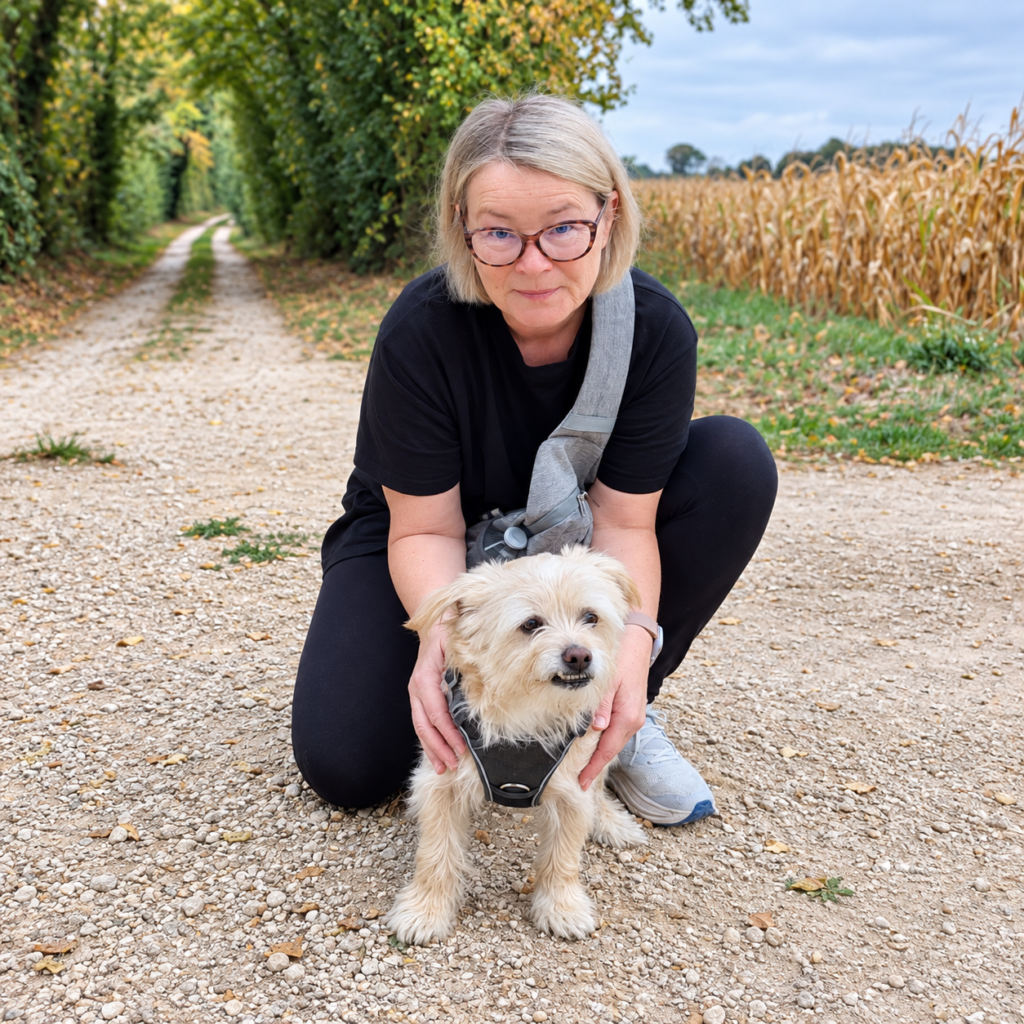
A diagnosis on her birthday
Micala was already having regular mammograms because she had breast cysts. An appointment was due in October 2020, but with COVID disrupting everyday life and no pain at the time, she did not arrange it.
By February 2021, a concern brought her back for a check-up. During that appointment, the team spotted something small on the images. They showed her what they could see, although Micala found it difficult to make it out herself.
Further imaging and a biopsy followed. Then, in June, on her birthday, she received confirmation that she had early-stage breast cancer.
Her treatment involved surgery and 36 days of radiotherapy, followed by five years of hormone therapy. Her lymph nodes were unaffected, and she did not need chemotherapy.
Even with the reassurance of an early diagnosis, there was a great deal to take in.
A familiar doctor made all the difference
One of Micala’s greatest sources of comfort was having an English-speaking doctor she trusted.
When her results came through, she was given the choice of contacting the team or speaking to her own doctor. She chose the familiar person who could help her understand what came next.
Her doctor arranged her ALD paperwork and gave her a list of hospitals and surgeons, encouraging her to find someone she felt comfortable with.
That part came as a surprise.
“You have been given a cancer diagnosis and you find your own surgeon.”
It was different from what Micala would have expected in the UK. Alongside absorbing the news, she now had names to research, hospitals to consider and an appointment to arrange.
She eventually contacted a surgeon at Polyclinique Inkermann. Some online reviews were unkind, but she decided to meet him and form her own impression.
During COVID, even that first meeting felt different. There were masks, no handshakes and fewer of the little gestures that can help put someone at ease.
“I was relying on the look of their eyes to offer me faith and trust that I was making the right choice,” she remembers.
Taking things one appointment at a time
The weeks between diagnosis and surgery were a whirlwind of pre-operative appointments, blood tests and COVID tests.
“You were literally scooped up, placed on the medical system and you just went along with it.”
There were practical hurdles too. Inconsistencies with her Carte Vitale needed sorting out, and someone who had helped Micala with French administration for several years stepped in.
Having a trusted person take care of that meant one less thing to carry while she prepared for surgery.
Micala chose to share her diagnosis with only immediate family and a handful of close friends. Keeping her circle small was what felt right for her at the time.
She also decided to avoid searching extensively online. She knew how easily one question could lead down a rabbit hole, leaving her more worried rather than reassured.
Instead, she put her trust in the team caring for her.
“I made a conscious decision, because I don’t do pain, needles, blood, to put my trust in the medical system and let them get me through this. And they did.”
Finding her feet after treatment
Looking back, Micala wishes she had asked more questions about life after surgery and radiotherapy.
She remembers being encouraged to trust the team with the medical treatment, then focus on her own mental, physical and emotional wellbeing.
But knowing how to do that—and where to turn for help—was not always easy.
Because her cancer had been found early, she sometimes compared her experience with those of women who had needed more extensive treatment. Yet she still had changes to adjust to, feelings to work through and questions that deserved answers.
Her story makes room for that quieter part of recovery: the time when treatment has finished, but you are still finding your feet.
Learning to feel at home in her body again
During her five years of hormone therapy, Micala made a conscious effort to pay more attention to her body.
After surgery, she initially found it difficult to move her arm properly. Tai chi and Pilates became helpful parts of her routine.
She also had regular lymphatic massages, which she personally feels played an important role in her recovery. Conversations with her massage practitioner and her own reading helped her understand more about the lymphatic system.
She still experiences occasional pain and has discussed this with her radiographer, including changes around her surgical scar.
The change to her breast was something else she had not fully anticipated. She had not realised how much tissue would be removed.
When reconstruction was offered, Micala decided she was comfortable with her breasts being different sizes. In her own words:
“It is a constant reminder, in a good way, of the personal hurdles that I had overcome.”
For her, that difference has become part of her story—something she has chosen to live with on her own terms.

Finding breast cancer support in France
Micala contacted Cancer Support France, although she found the response times disappointing at that point in her experience. She knew about local Facebook groups too, but chose not to join them.
It was only later that she learned more about Cancer Support France’s services, particularly active listening. She also became aware of La Ligue contre le cancer and the help it provides.
Looking back, she wishes that information had been easier to find when she needed it.
“Even now, today, it still feels very disjointed.”
When concerns have come up, she has continued to turn to her oncology team or her own doctor.
She is grateful for her medical care, while also recognising that clearer guidance about emotional and practical support would have helped.
“Get your support network in place”
Micala’s first advice to someone newly diagnosed is simple:
“Get your support network in place. And include your other half/partner as well, because it affects both.”
For her, it matters that the people closest to you have support too. They may be trying to help while also managing their own worries.
She encourages people to stay close to their doctor and oncology team, asking questions about their own circumstances rather than getting lost in other people’s stories online.
And she wants anyone going through treatment to feel able to make time for themselves.
“Factor in plenty of self care and don’t feel guilty or selfish about it.”
That might look different for everyone. In Micala’s experience, giving attention to her wellbeing mattered before surgery, during recovery and throughout the years of follow-up care.
Looking ahead, with gratitude
As of September 2026, Micala had received the last of her radiograph reviews. She continues to see her surgeon annually and have yearly mammograms.
She looks back with gratitude for the early detection of her cancer, her trusted doctor and the team who helped her through treatment.
She also knows how much she had to work out along the way.
By sharing her experience, Micala hopes to make that journey a little less daunting for someone else. Her advice is warm and practical: find people you can lean on, ask the questions that matter to you, and give yourself permission to receive care as well as treatment.
Join Micala in supporting Octobre Rose
Micala is also helping bring people together for a cause close to her heart through the October Rose Afternoon Tea & Auction at Jonction42 on Friday 16 October.
This year, the theme is full-on pink: a luxury afternoon tea, pink fizz, fabulous auction experiences, luxury hampers and a prize for the Best Dressed Pink Guest.
All 100 seats are now sold out, but there is still a way to join in—even if you couldn’t get a ticket or live further away.

The online auction is now live
The auction has gone online, with a wonderful collection of donated experiences, artwork, handmade treasures, luxury gifts and more. You can browse the catalogue, find something you love and place a maximum bid from wherever you are.
You do not need an event ticket to browse or bid online. The afternoon tea itself remains a ticketed, sold-out event.
Online bidding closes: 8pm on Wednesday 14 October.
The live auction takes place: Friday 16 October.
Funds raised support: La Ligue contre le cancer – Comité de la Vienne (86).
Browse the Online Auction Catalogue
Visit the October Rose Facebook Event Page for full details
Every bid helps support the fundraising, and sharing the links is another lovely way to lend a hand. You never know—there might be something in the catalogue with your name on it. 💗
Thank you to Micala Wilkins for sharing her story so openly. This article reflects her personal experience following her diagnosis in 2021, with an update from September 2026.
Finding support in France
Whether you have recently been diagnosed, are living with the effects of treatment or are supporting someone you love, these organisations can help you find information, understanding and support.
Cancer Support France — Free, confidential support for English-speaking people affected by cancer in France, including patients, families and carers. Email helpline@cancersupportfrance.org, or call 0800 240 200 and leave a message for a callback.
La Ligue contre le cancer — Find your local committee for support during and after cancer. Services vary locally and can include emotional support, wellbeing activities and help with financial difficulties. Its national support number is 0800 940 939. Services are primarily in French.
Cancer Info — Institut national du cancer — Reliable information in French about cancer, treatment and practical questions. Call 0805 123 124, free of charge, Monday to Friday, 9am–7pm, and Saturday, 9am–2pm.
Vivre Comme Avant — Individual listening and emotional support from trained volunteers who have themselves experienced breast cancer. A helpful option for women who would like to talk to someone who understands that experience.
Pink Ladies France — A Facebook support group for women affected by any form of cancer in France, offering shared experiences, practical tips and encouragement from others who understand.
You don’t have to wait until you feel overwhelmed to reach out. Support can be valuable during treatment, afterwards, and for those close to you.