Part two of Hello Santé’s Octobre Rose series sharing women’s experiences of breast cancer care and support in France.
For Octobre Rose, Hello Santé is sharing personal stories from women diagnosed with breast cancer at different points in time. Through their experiences, we hope to offer honest insight, practical advice and reassurance to anyone facing a diagnosis—or supporting someone they love.
This story comes from Jeannie Clark, who was diagnosed in 2011 and received her treatment in Niort, in the Deux-Sèvres.
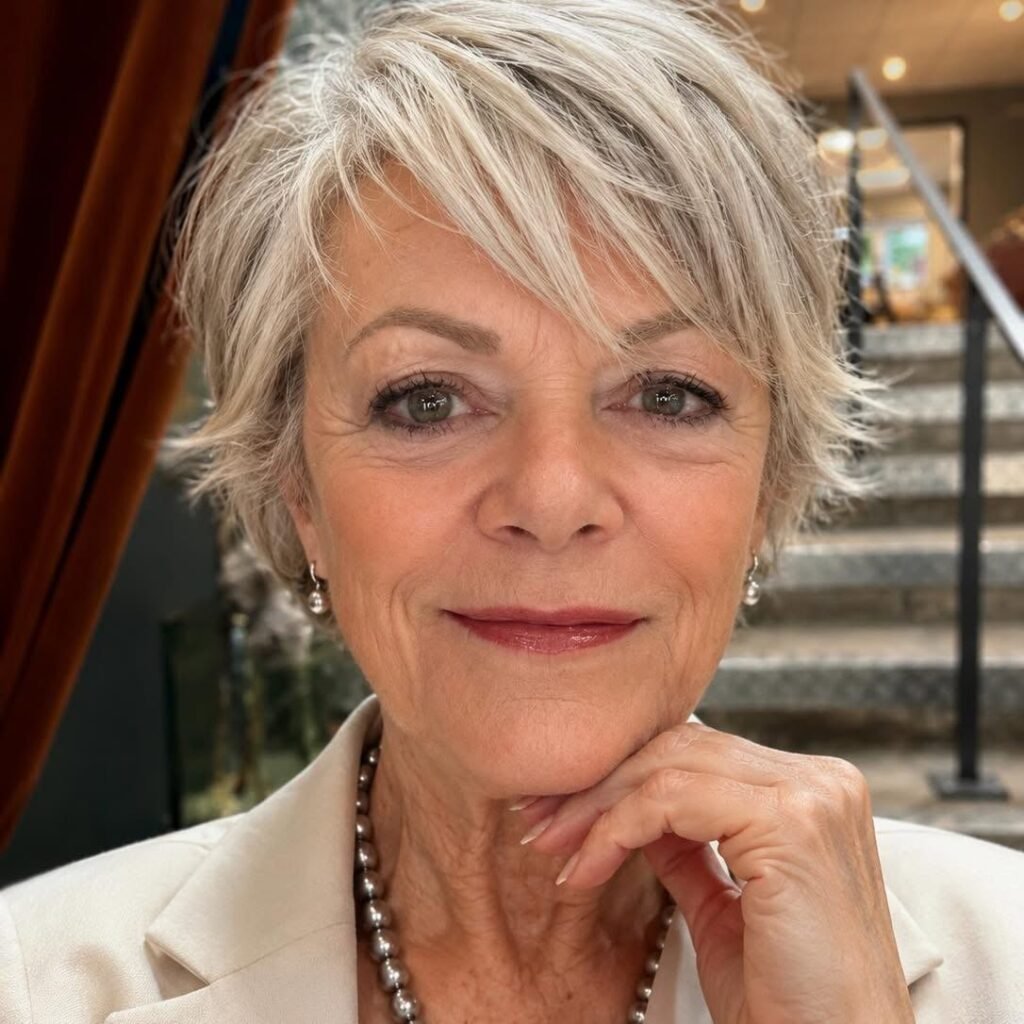
“I was fit, active and perfectly healthy”
When Jeannie received her first two invitations for a routine mammogram, she did not attend.
Her husband was ill at the time, and Jeannie felt completely healthy. She was fit and active, with no lump, no worrying symptoms and no family history of breast cancer. She had no reason to imagine that anything could be wrong.
When she eventually attended her first mammogram, however, the images revealed a cluster of abnormal-looking cells.
Samples were taken for a biopsy and sent to Bordeaux for further analysis. Jeannie then faced a worrying wait of two or three weeks for the results. When they finally arrived, she learned that the cells were cancerous.
“It came as a real shock,” she says. “I had no lumps and nothing sinister at all. I had none of the usual alerts that you might expect.”
In Jeannie’s case, routine screening detected something she could not see or feel herself.
Finding her way through French healthcare
The period following Jeannie’s diagnosis felt like a blur. Once the cancer had been identified, however, she found that the French healthcare system guided her clearly through each stage.
“It was all really sorted out for me,” she remembers. “I was told where to go, what to do and where the next appointment was going to be.”
Jeannie underwent a lumpectomy and a sentinel lymph-node procedure. She then received chemotherapy and radiotherapy in Niort, approximately 45 minutes from her home.
The approach taken by her French surgeon came as something of a cultural shock. Jeannie had expected a more counselling-led conversation, but instead received a direct and matter-of-fact explanation.
“It was a case of: ‘Right, you’ve got cancer. This is what we’re going to do.’ Bang, bang, bang.”
Although the delivery initially surprised her, Jeannie found that the straightforward approach suited her.
“I actually appreciated it. I didn’t want to start going into, ‘What about this?’ or ‘What about that?’ I liked being told, ‘We’ve got this. This is what we’re doing.’”
For Jeannie, having a clear plan helped her place her trust in the medical professionals caring for her.
Getting through chemotherapy
Jeannie describes much of her chemotherapy experience as manageable. For her, one of the biggest challenges was the boredom of sitting through repeated treatment sessions.
During her first session, she was placed in a room by herself so the medical team could monitor how she reacted. At subsequent appointments, she received treatment in a shared room alongside other patients.
Her practical advice is to take something that will help pass the time.
“Take an audiobook, some embroidery or something else to do,” she suggests. “It’s just so boring!”
Jeannie did lose her hair, but she found a wig that looked so natural and stylish that her daughters were impressed by it.
“My wig was so good that my daughters were convinced they might opt for wigs themselves when they were older if their hair started thinning!”
She remembers one particularly difficult session after her chemotherapy medication was changed. Jeannie developed severe stomach cramps and had to contact a doctor for help. Once she received medication for the cramps, the problem settled.
She wishes she had known in advance that this could happen and what help might be available.
Overall, Jeannie approached treatment as something she needed to get through in order to become well again.
“I was very conscious of thinking, ‘Okay, this is what I need to do to get better.’”
Care that helped her feel reassured
One aspect of her care that particularly reassured Jeannie was the immediate access to further examinations.
During breast-imaging appointments, if something needed a closer look, an ultrasound could be carried out and reviewed by a specialist during the same visit. She appreciated receiving information without another long wait or having to return for repeated appointments.
“It was much more hands-on,” she explains. “It was done at the time, and I think that was a major advantage.”
Jeannie was extremely happy with the care she received in Niort. Her husband was also treated for cancer there over the years, and they both felt grateful for the service provided.
She drove herself to and from many of her treatment appointments. In her circumstances at the time, she was also able to claim reimbursement for the mileage.
When friends disappear
While Jeannie felt well supported medically, her experience of personal support was more complicated.
Her husband struggled to know what to do or how to help. Jeannie believes partners can feel overwhelmed too: they cannot make the illness go away, and that helplessness can be difficult to manage.
What disappointed her most was the reaction of some friends.
“As soon as they found out about my diagnosis, you didn’t see them for dust,” she says.
Jeannie did not expect anyone to have the perfect words or answers. What she needed was something much simpler: for people to remain present, stay in contact or occasionally pick up the phone.
She believes many people withdrew because they felt embarrassed or did not know what to say. Whatever the intention, that silence made an already difficult time feel lonelier.
Her message to the friends of someone newly diagnosed is simple: you do not need to know what to say. Just being there matters.
“Am I going to die?”
Jeannie recalls that her first thoughts following the diagnosis were stark and frightening.
“Am I going to die? How long have I got?”
She chose to place her trust in the professionals treating her. Looking back on her diagnosis in 2011, she remains deeply grateful for the care she received.
She had felt healthy, with no lump and no family history of breast cancer. The mammogram she had nearly missed became the starting point for her diagnosis and treatment.
Her experience also left her with a lasting understanding of how much it matters to have someone beside you—someone willing to listen, even when they do not have the answers.
Finding support through Pink Ladies France
Jeannie’s own experience helped inspire her to support other women. She became one of the original founders of Pink Ladies France, a Facebook support group for women affected by any form of cancer in France.
The group offers a place to share experiences, ask questions and find encouragement from others who understand the challenges of diagnosis, treatment and life afterwards. Whether someone wants practical tips about navigating French healthcare or simply a listening ear, that connection can help them feel less alone.
“We can give up-to-date, firsthand experience and support to other ladies who are going through this,” Jeannie explains.
For Jeannie, the value of the group lies in that shared understanding. Members can talk about appointments and treatment, but also about the feelings that are sometimes harder to explain to people who have not been through cancer themselves.
Having once needed that understanding herself, she now helps offer it to others.
Her story brings together two lasting messages: how much that mammogram mattered in her own life, and how much a phone call, a listening ear or a supportive community can mean during treatment and beyond.
Thank you to Jeannie Clark for sharing her experience so openly. This article reflects her personal experience of care following her diagnosis in 2011.
Finding support in France
Whether you have recently been diagnosed, are living with the effects of treatment or are supporting someone you love, these organisations can help you find information, understanding and support.
Cancer Support France — Free, confidential support for English-speaking people affected by cancer in France, including patients, families and carers. Email helpline@cancersupportfrance.org, or call 0800 240 200 and leave a message for a callback.
La Ligue contre le cancer — Find your local committee for support during and after cancer. Services vary locally and can include emotional support, wellbeing activities and help with financial difficulties. Its national support number is 0800 940 939. Services are primarily in French.
Cancer Info — Institut national du cancer — Reliable information in French about cancer, treatment and practical questions. Call 0805 123 124, free of charge, Monday to Friday, 9am–7pm, and Saturday, 9am–2pm.
Vivre Comme Avant — Individual listening and emotional support from trained volunteers who have themselves experienced breast cancer. A helpful option for women who would like to talk to someone who understands that experience.
Pink Ladies France — A Facebook support group for women affected by any form of cancer in France, offering shared experiences, practical tips and encouragement from others who understand.
You don’t have to wait until you feel overwhelmed to reach out. Support can be valuable during treatment, afterwards, and for those close to you.