Part one of Hello Santé’s three-part Octobre Rose series sharing women’s experiences of breast cancer care and support in France.
For Octobre Rose, Hello Santé is sharing the stories of three women whose breast cancer diagnoses came at different times. Through their experiences, we hope to offer practical advice, honest insight and reassurance to anyone facing a diagnosis or supporting someone they love.
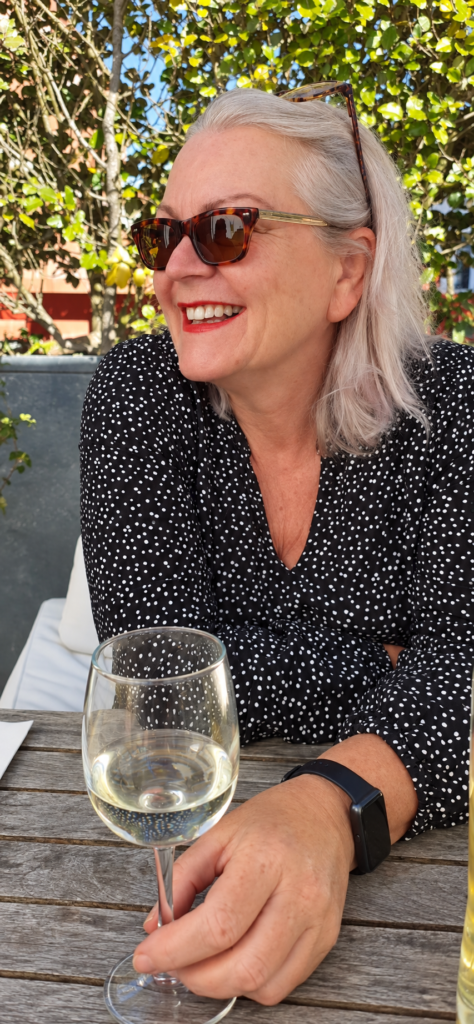
Our first story comes from Susan Gahan, who was diagnosed in 2011 at the age of 42. She received her care at the Soyaux clinic and Girac Hospital in Charente.
The appointment that may have saved her life
Susan has lived in France for 23 years. Fifteen years ago, she visited her médecin traitant because she had been feeling low. To Susan’s surprise, her doctor told her to arrange a mammogram.
“She didn’t examine me, but I’ve always felt that she saved my life,” Susan says.
When Susan returned home, she examined her breasts herself and found a small, hard lump. She was distraught. Until then, she had thought that her doctor’s suggestion of a mammogram seemed rather strange.
She quickly secured an appointment, and everything moved rapidly from that point. The biopsy was extremely difficult and left her badly bruised. What followed was an agonising ten-day wait for the results.
The diagnosis was breast cancer.
Further tests and scans showed that the cancer had also reached Susan’s lymph nodes. Suddenly, she found herself facing treatment while raising two young children, aged just nine and four.
Excellent treatment, but difficult communication
Susan is profoundly deaf, but says that she generally managed to navigate the French healthcare system. She remembers having an excellent surgeon and oncology team, and describes the treatment she received as fantastic from beginning to end—even though she experienced complication after complication.
However, the way information was communicated was not always as good as the medical care itself.
“Some doctors do have a weird bedside manner—or rather, none at all!” she says.
After the biopsy left Susan black and blue, the doctor apologised to her then-partner for the bruising, but not to Susan herself. It is one example of how a patient can sometimes feel overlooked, even when the treatment they receive is clinically excellent.
Communication became an even greater concern when Susan started taking medication following her initial treatment. She says she had not been fully informed about the possible side effects, which for her included severe pain, weight gain and days when she would simply “crash and burn.”
When she raised these problems, she felt that she was expected to accept them as part of the treatment. The complications eventually led to a full hysterectomy. Susan also now lives with severe arthritis, which her surgeon has linked to her cancer treatments.
Her experience has left her with one firm belief: patients need clear and complete information about their medication, including possible side effects and what to do if they occur.
Finding support—or not finding it
When Susan was diagnosed in 2011, the cancer support networks available in France today did not yet exist in the same way.
She contacted one association, but whatever she asked, the response seemed to be the same: “We can’t advise you on that.”
Her main source of support was a small circle of close friends. Her relationship with her partner did not survive, although she says—with characteristic humour—that they remain friends today.
Susan is pleased that people receiving treatment now have access to more support, including help with appearance and pain management. However, she believes mental health support still has a long way to go.
A cancer diagnosis affects much more than the body. Fear, uncertainty and the pressure to appear strong can continue long after appointments and treatment have ended. Susan believes this emotional impact needs far greater recognition.
Supporting the whole family
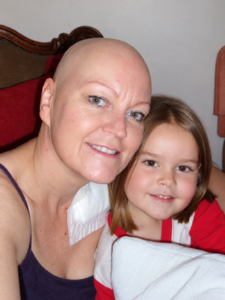
Susan also stresses that cancer affects partners and children, including adult children, who may need support of their own.
Her children were very young when she was diagnosed. She knew there might be things they felt unable to say to her, so she identified trusted friends they could approach instead.
“I told them, ‘If you can’t talk to me, talk to someone,’” she explains.
It was a simple but important way of giving her children permission to express feelings they might otherwise have hidden to protect their mum.
Well-meaning friends can also struggle to know what to say. Phrases such as “You’re being treated” or “You’ve got the best care” may be intended as reassurance, but they can unintentionally minimise what the person is actually experiencing.
Good medical care does not remove the fear, pain or emotional upheaval that can accompany a cancer diagnosis.
“Don’t try to muddle through”
Susan’s advice to someone newly diagnosed is clear: ask for help.
“Don’t try to muddle through, and there is no shame in asking for antidepressants if you feel you need them.”
She recognises how tempting it can be to “jolly” your way through cancer to avoid upsetting family and friends—particularly when you have young children. You may tell everyone that you are fine while your mind is in turmoil.
“Look after yourself more,” Susan advises. “Tell people the truth about how you feel rather than saying, ‘All good.’ Take everything that’s offered.”
Today, Susan has annual mammograms and receives tremendous support from her doctor. Cancer is no longer something she thinks about every day, although it never disappears entirely from the back of her mind.
She still faces that reality with humour.
“I sometimes think a combine harvester will get me—because I’m deaf and won’t hear it coming—rather than the cancer!”
Turning experience into support for others
Susan is now part of the admin team for Pink Ladies France, a Facebook support group for women in France who have cancer or are undergoing treatment.
Having experienced how isolating a diagnosis could feel fifteen years ago, she is glad that women now have more opportunities to connect with others who understand what they are going through.
Her recommendation to anyone facing cancer treatment in France is to seek out that community rather than trying to cope alone.
Susan’s story is a reminder that receiving excellent medical treatment and needing greater emotional support are not mutually exclusive. Patients deserve both. They also deserve honest information, space to talk about how they truly feel and permission to accept every bit of help available to them.
Thank you to Susan Gahan for sharing her experience so openly. This article reflects Susan’s personal experience and is not a substitute for individual medical advice. If you have concerns about treatment or side effects, speak to your doctor, oncologist or pharmacist.
Finding support in France
Whether you have recently been diagnosed, are living with the effects of treatment or are supporting someone you love, these organisations can help you find information, understanding and support.
Cancer Support France — Free, confidential support for English-speaking people affected by cancer in France, including patients, families and carers. Email helpline@cancersupportfrance.org, or call 0800 240 200 and leave a message for a callback.
La Ligue contre le cancer — Find your local committee for support during and after cancer. Services vary locally and can include emotional support, wellbeing activities and help with financial difficulties. Its national support number is 0800 940 939. Services are primarily in French.
Cancer Info — Institut national du cancer — Reliable information in French about cancer, treatment and practical questions. Call 0805 123 124, free of charge, Monday to Friday, 9am–7pm, and Saturday, 9am–2pm.
Vivre Comme Avant — Individual listening and emotional support from trained volunteers who have themselves experienced breast cancer. A helpful option for women who would like to talk to someone who understands that experience.
Pink Ladies France — A Facebook support group for women affected by any form of cancer in France, offering shared experiences, practical tips and encouragement from others who understand.
You don’t have to wait until you feel overwhelmed to reach out. Support can be valuable during treatment, afterwards, and for those close to you.